Auction vs Buy It Now Sold Prices on eBay: Why They Differ and Which to Comp
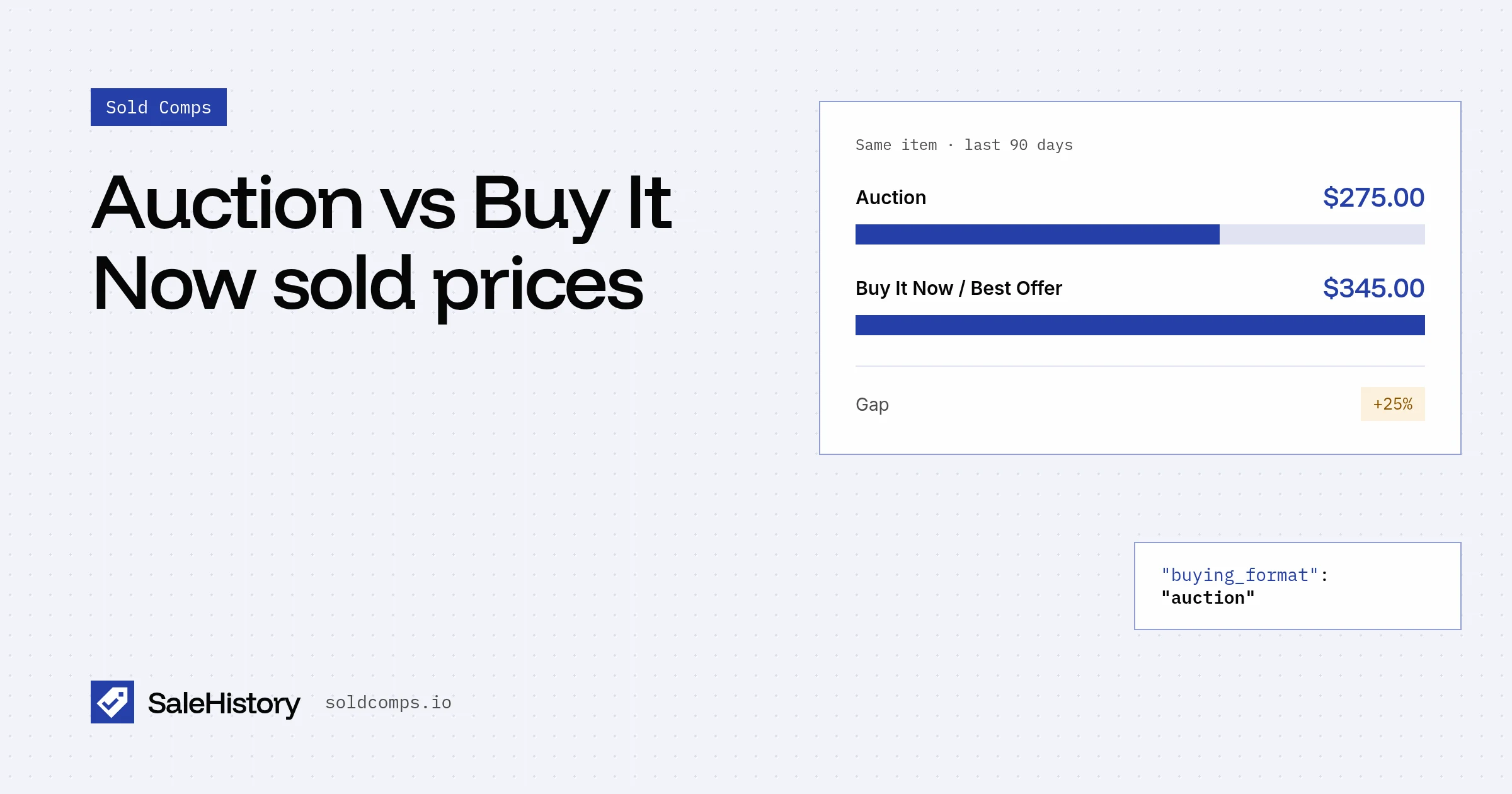
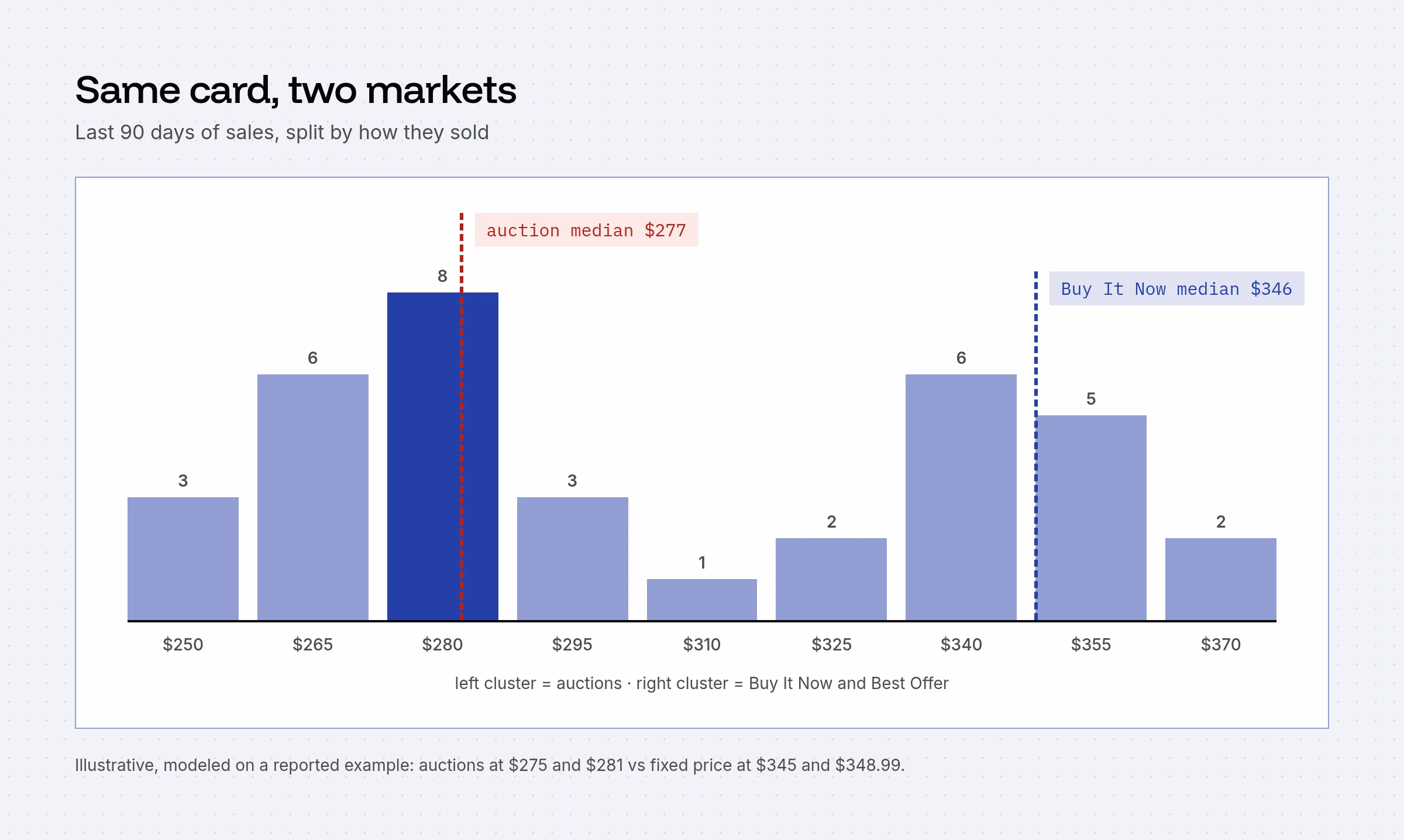
A card investor pulled the last sales of one card and found two different prices hiding in the same search. The last auctions closed at $275 and $281. The last Buy It Now and Best Offer sales went for $345 and $348.99. That's about a 25% gap for the identical card.
If you average those together, you get a number that matches neither market.
Why the gap exists
- Auctions clear at "right now." The price is whatever the bidders who happen to be watching at the end will pay. Fewer bidders, lower price.
- Buy It Now buyers pay for certainty. They want it now, at a known price, without watching a timer.
- Bid-ask spread. As one reply put it: "The difference you're citing can basically be attributed to a bid-ask spread." Auctions look more like the bid; Buy It Now looks more like the ask that someone accepted.
It's not always this direction. Hyped or rare items can spark bidding wars that beat fixed-price listings. But for most everyday items, auctions close lower.
Which sold prices to comp
| You're listing as… | Comp against |
|---|---|
| Buy It Now | Buy It Now sales and accepted Best Offers (watch for hidden offer prices) |
| Auction | Auction results, ideally at a similar ending time |
| Deciding what to pay | The auction median: it's closer to what you could liquidate for quickly |
That last row is a quiet advantage: if a deal still works at auction prices, you can always move it fast.
How to split them on eBay
On the sold results page, open the Buying Format filter and pick Auction or Buy It Now, one at a time. Take the median of each. If you only look at the combined list, the mix of formats can swing your "comp" from week to week even when nothing about the market changed.
Splitting them in code
Every sale from the sold-listings API comes back with its format, so you can compute both medians from one request:
from statistics import median

items = sold("charizard 4/102 psa 9")["items"]
auction = [i["sold_price"]["value"] for i in items if i["buying_format"] == "auction"]
fixed   = [i["sold_price"]["value"] for i in items if i["buying_format"] == "fixed_price"
           and i["best_offer_price_known"]]

print("auction median:", median(auction))
print("buy it now median:", median(fixed))
Or pass buying_format=auction / buying_format=fixed_price to get stats for one format directly. See the docs.
Frequently asked questions
Do auctions or Buy It Now sell for more on eBay?
For many items, Buy It Now sales close higher than auctions of the same item, because auctions clear at what active bidders will pay at that moment. Rare or hyped items can be the exception, when several bidders compete.
Should I use auction prices as comps for a Buy It Now listing?
Not on their own. Auction results usually understate what a fixed-price buyer will pay. Use Buy It Now and accepted Best Offer sales to price a Buy It Now listing, and auction results to predict an auction.
Why did my auction sell under the comps?
Auctions depend on how many bidders show up when it ends. Ending times, start price, photos and competing listings all matter. If comps were mostly Buy It Now sales, an auction landing lower is normal.
Sources
- r/PokeInvesting: Auction vs Buy Now / Best Offer comps ($275/$281 vs $345/$348.99, Sep 2026) (accessed Oct 22, 2026)
- r/soccercard: Auction sells heavily under the comps (Jan 2026) (accessed Oct 22, 2026)
SaleHistory sells an eBay sold-listings API, so we have a commercial interest in this topic. We link primary sources so you can check our work. Spotted something out of date? Email hello@soldcomps.io.