eBay Best Offer Sold Price: How to Tell What the Buyer Really Paid
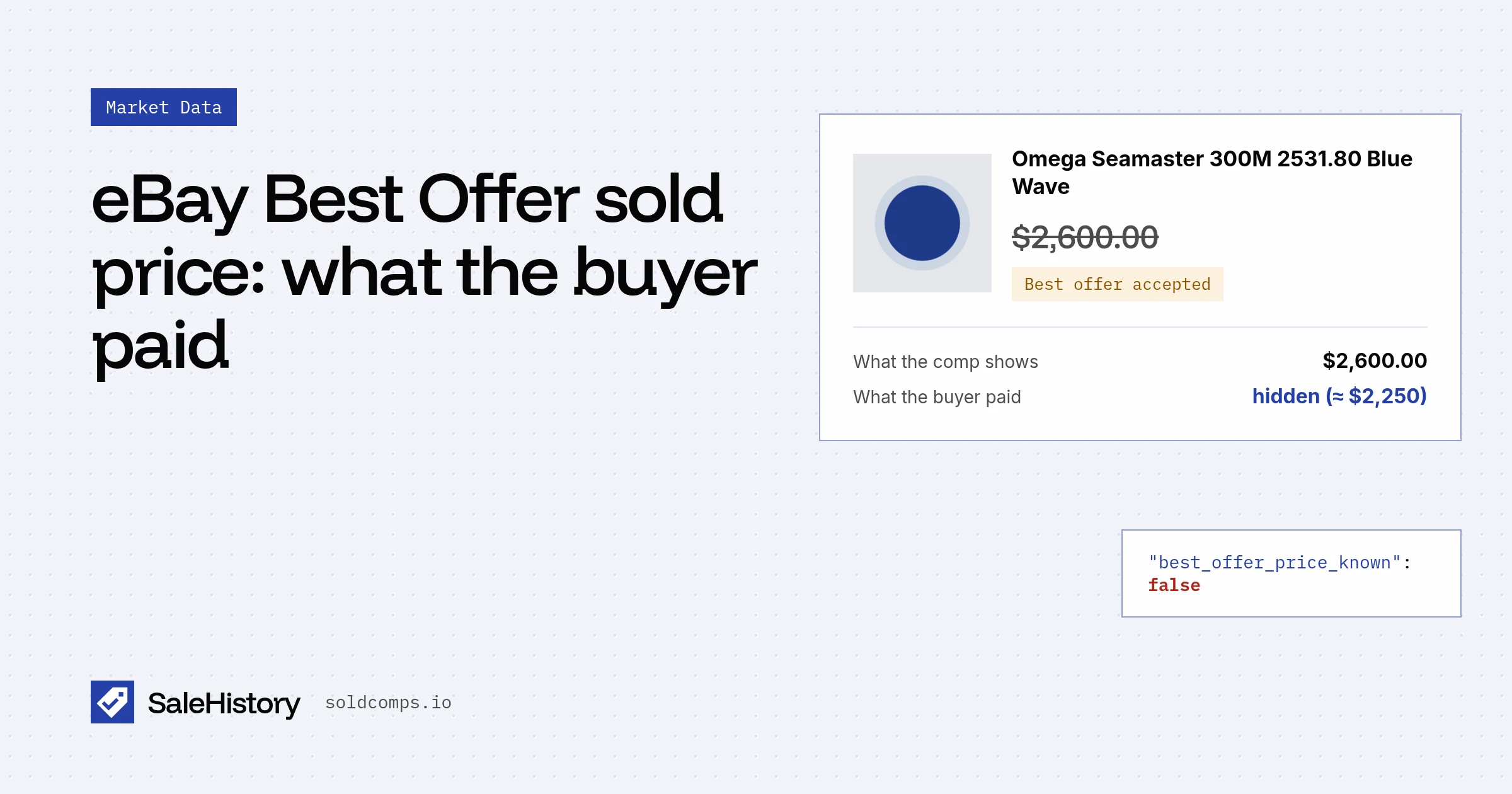
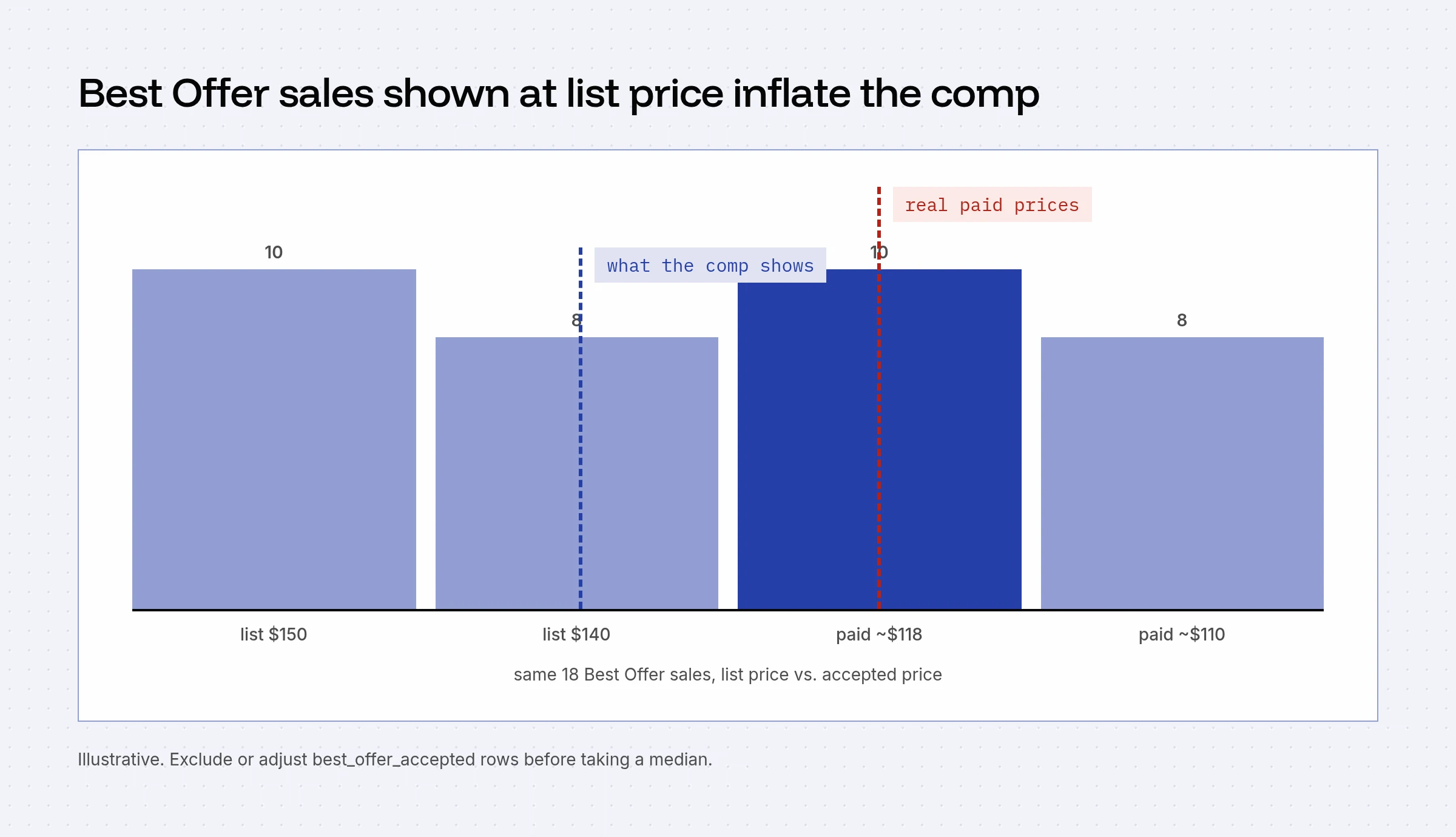
You look up sold comps, see a handful at $150, and list yours at $145. It sits. The reason is often hiding in plain sight: those $150 "sales" were accepted Best Offers, and the buyers paid closer to $115.
What eBay shows
On a sold search, a Best Offer sale usually shows the original price, sometimes with a strikethrough, and the label Best offer accepted. The price shown is what the seller asked, not what they got.
It's not even consistent. One seller on eBay's community board complained that "the strike-through DOES NOT ALWAYS SHOW UP." So you can't rely on the visual cue; look for the label.
Why it matters
Pricing is "all over the place because some take lowball offers," as one reseller put it. If a meaningful share of an item's sales go through Best Offer, the displayed prices can push your comp well above reality. That's especially true for:
- Higher-priced items, where buyers expect to negotiate
- Slow-moving categories, where sellers accept offers to clear stock
- Anything listed well above market to "anchor" offers
How to handle it
- Spot them. Look for "Best offer accepted" on each sold result.
- Use the real price when it's shown. Sometimes eBay displays the accepted amount; use that.
- Otherwise, exclude them. A median of clean auction and Buy It Now sales beats a median polluted with list prices.
- If most sales are Best Offers, assume the market is below the displayed prices and price accordingly.
In the API
Every item in a SaleHistory response carries two fields so you don't have to eyeball this:
{
  "title": "Omega Seamaster 300M 2531.80 Blue Wave",
  "sold_price": { "value": 2600.00, "currency": "USD" },
  "best_offer_accepted": true,
  "best_offer_price_known": false
}
When best_offer_price_known is false, sold_price is the list price and the item is left out of stats.median. When eBay does show the accepted amount, sold_price is the amount paid and the item counts normally.
More on keeping comps honest: median vs. average and what are sold comps.
Frequently asked questions
How do I see the actual Best Offer price on eBay?
Sometimes eBay shows the accepted price directly. Often it only shows the original price with a strikethrough and 'Best offer accepted', meaning the buyer paid less. Some third-party tools show accepted amounts when eBay exposes them.
Do Best Offer sales inflate sold comps?
Yes, if you count the displayed list price as the sold price. The buyer paid less, so including those sales pushes your comp up.
Does the strikethrough always show on Best Offer sales?
No. eBay sellers have reported that the strikethrough doesn't always appear, so check for the 'Best offer accepted' label rather than relying on the strikethrough.
Sources
- eBay Community: Best Offer Accepted sold comps displaying weird (accessed Oct 22, 2026)
- r/Flipping: Access to eBay completed sale / Best Offer prices (May 2026) (accessed Oct 22, 2026)
- r/reselling: Anyone else spending way too long pricing items? (accessed Oct 22, 2026)
SaleHistory sells an eBay sold-listings API, so we have a commercial interest in this topic. We link primary sources so you can check our work. Spotted something out of date? Email hello@soldcomps.io.