The math behind a good price: outlier filtering, medians vs. averages, sell-through rate, and how much history you actually need.
Start here (3 guides)
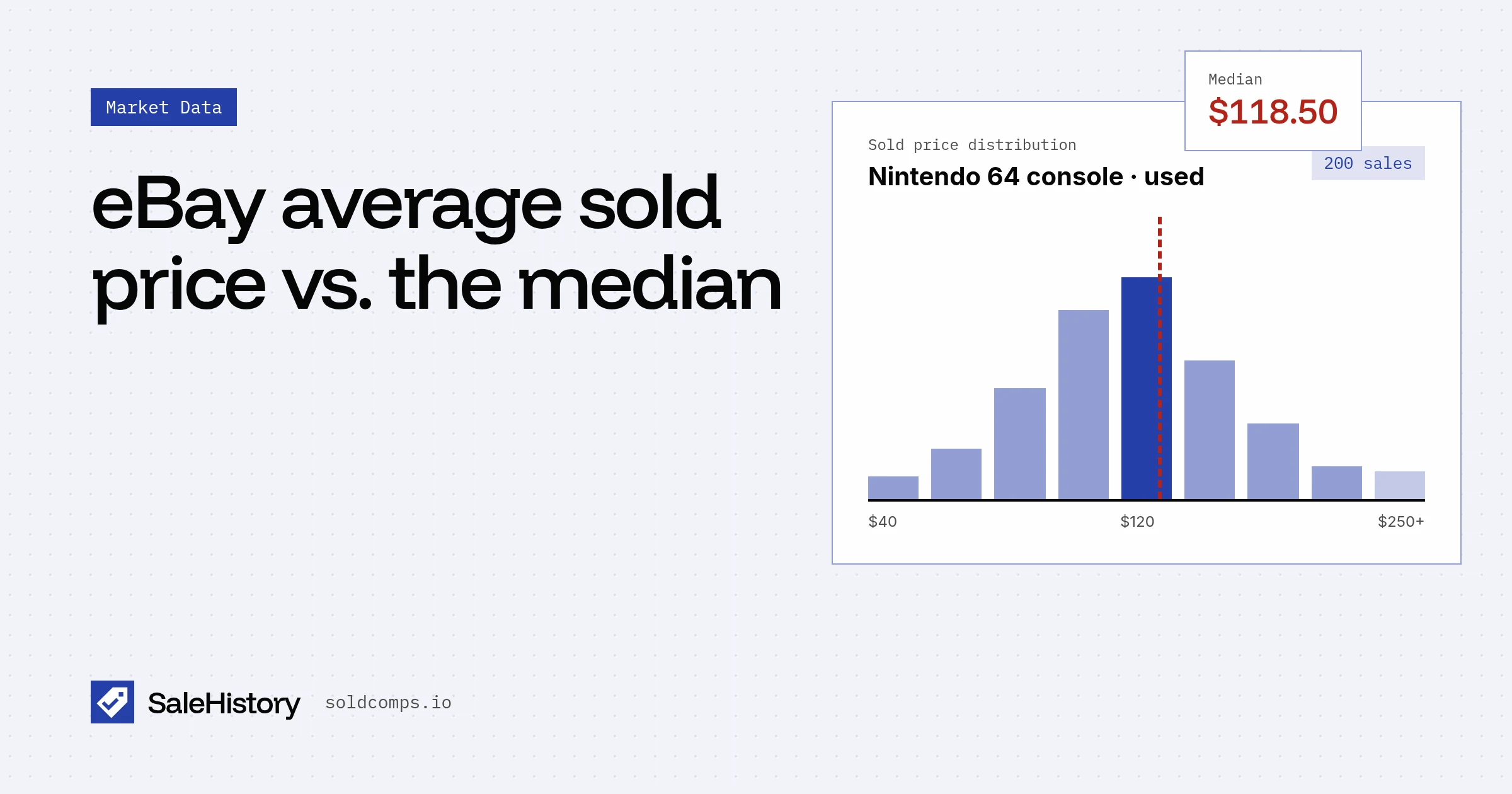
eBay Average Sold Price: Why You Should Use the Median Instead — Use the median. eBay sold data is full of bundles, sealed copies, damaged items and Best Offers shown at list price, and a few of those can move the average by 20% or more while barely moving the median. Remove lots and for-parts sales first, drop prices more than 1.5 times the interquartile range beyond the middle 50%, then take the median of what's left.
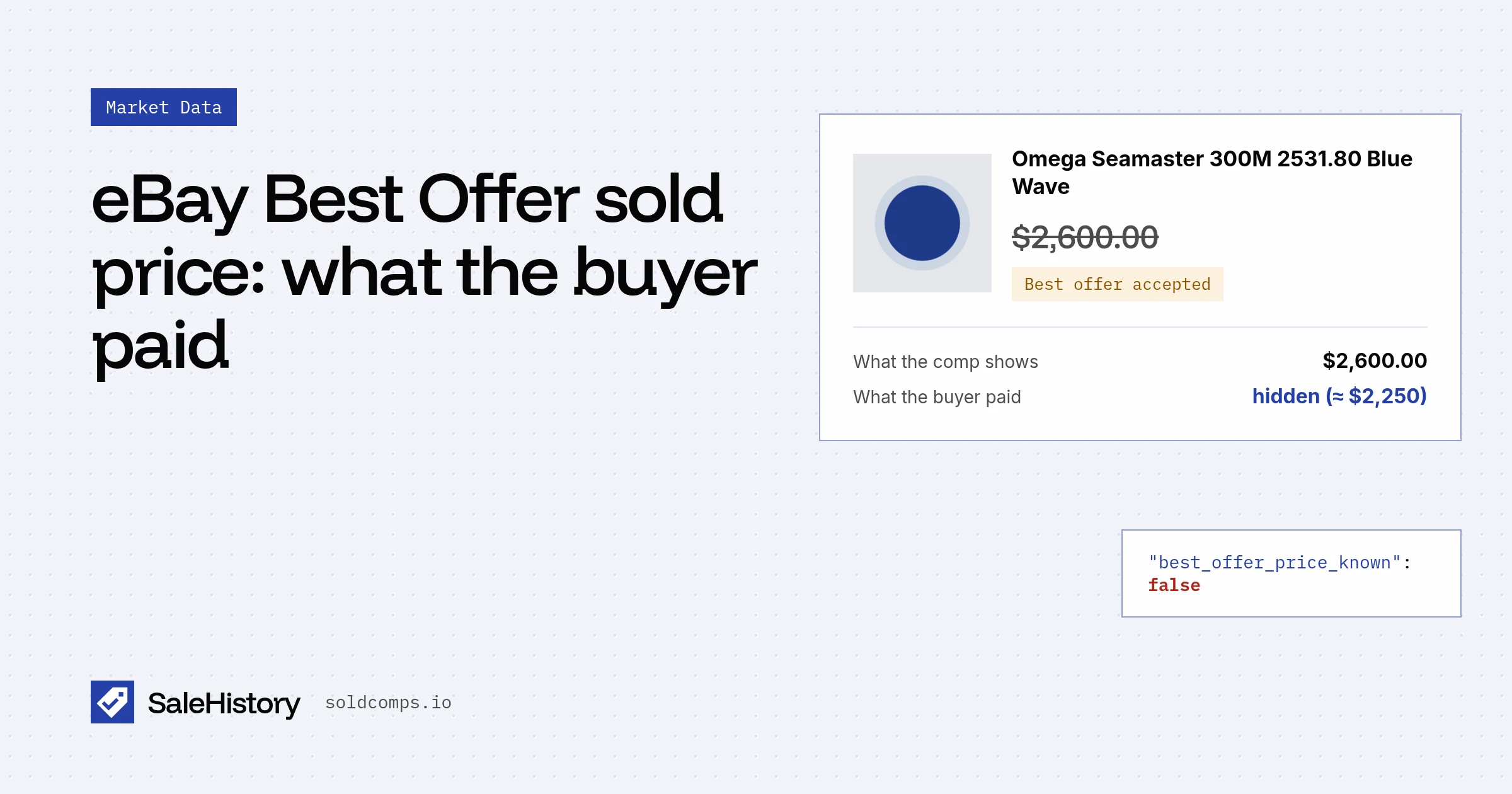
eBay Best Offer Sold Price: How to Tell What the Buyer Really Paid — When an eBay listing ends with 'Best offer accepted,' the price you see is often the original list price, not what the buyer paid, and the accepted amount is frequently hidden. Treat those sales as overstated. Either leave them out of your comps or use them only when the accepted amount is known. In SaleHistory responses, best_offer_price_known is false for these, and they're excluded from the median.
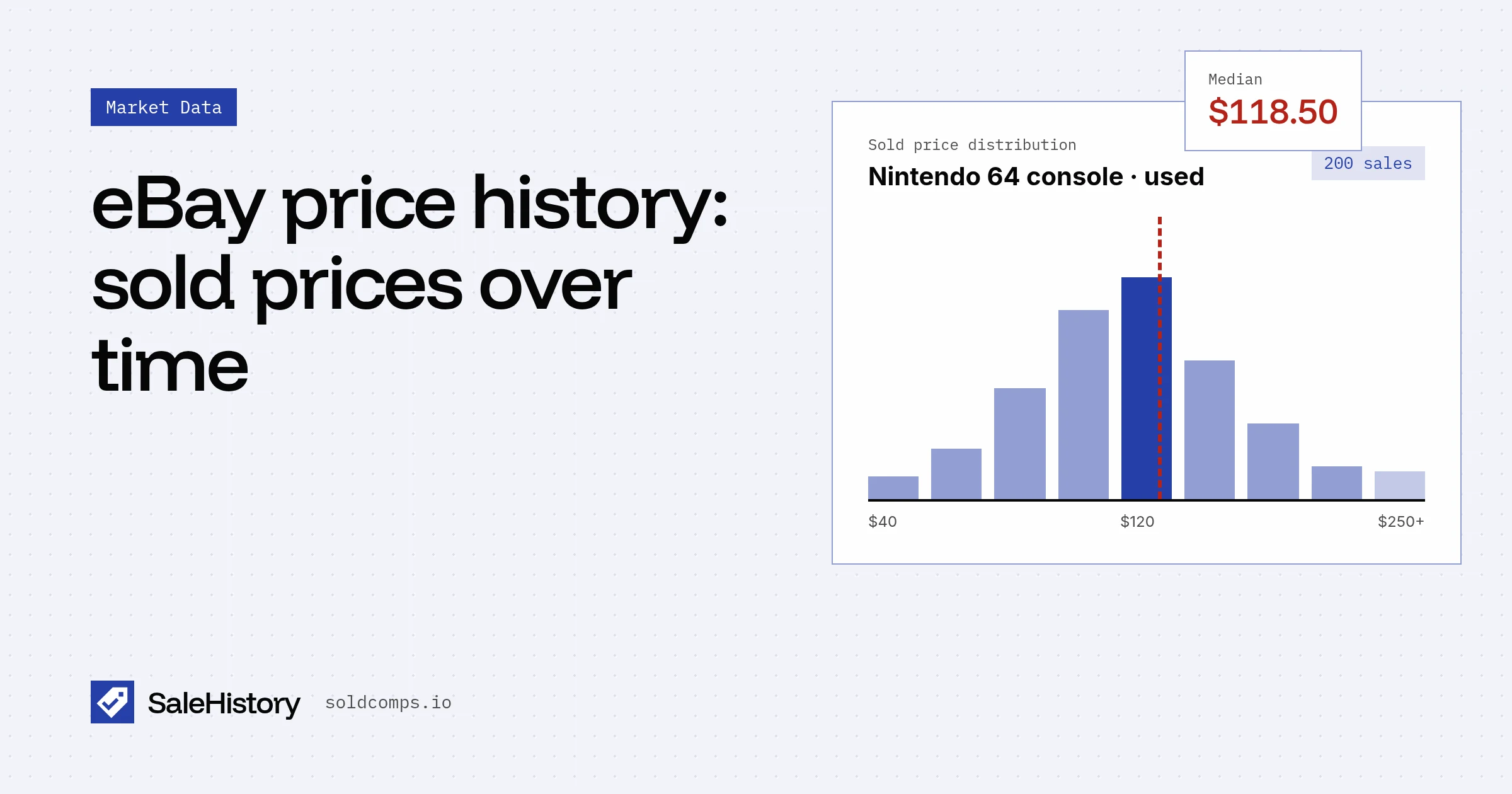
eBay Price History: How to See What an Item Sold For Over Time — eBay's sold search shows roughly the last 90 days of sales. For longer price history, eBay sellers can use Product Research (Terapeak) in Seller Hub, which shows about three years of averages but no individual sales and no export. For history you can chart or use in code, log the median sold price yourself once a day or week, starting now. After a few months you have a price history nobody can take away.