Working examples in Python, JavaScript and spreadsheets for fetching eBay sold listings, cleaning them, and turning them into a price you can trust.
Start here (9 guides)
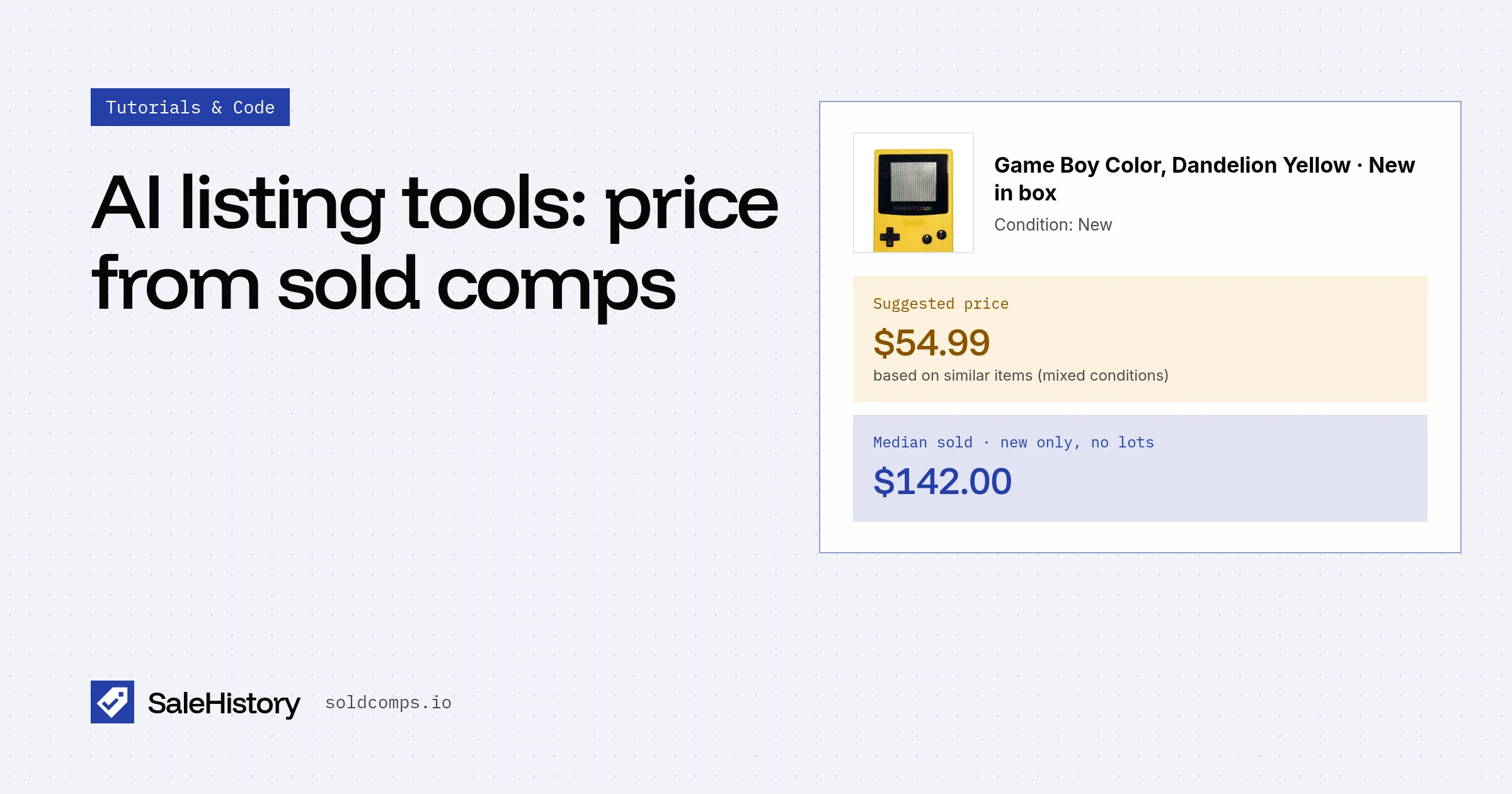
AI Listing Tools: Price From Sold Comps, Not Asking Prices — AI listing tools should price from recent sold listings, not active ones. Active listings are asking prices, and many never sell, so a price built on them runs high and the item sits. Add a pricing step: after the AI identifies the item, search sold listings for that exact item and condition, use the median of clean sales, and show the user the sales behind it. Never let the model invent a price when the lookup fails.
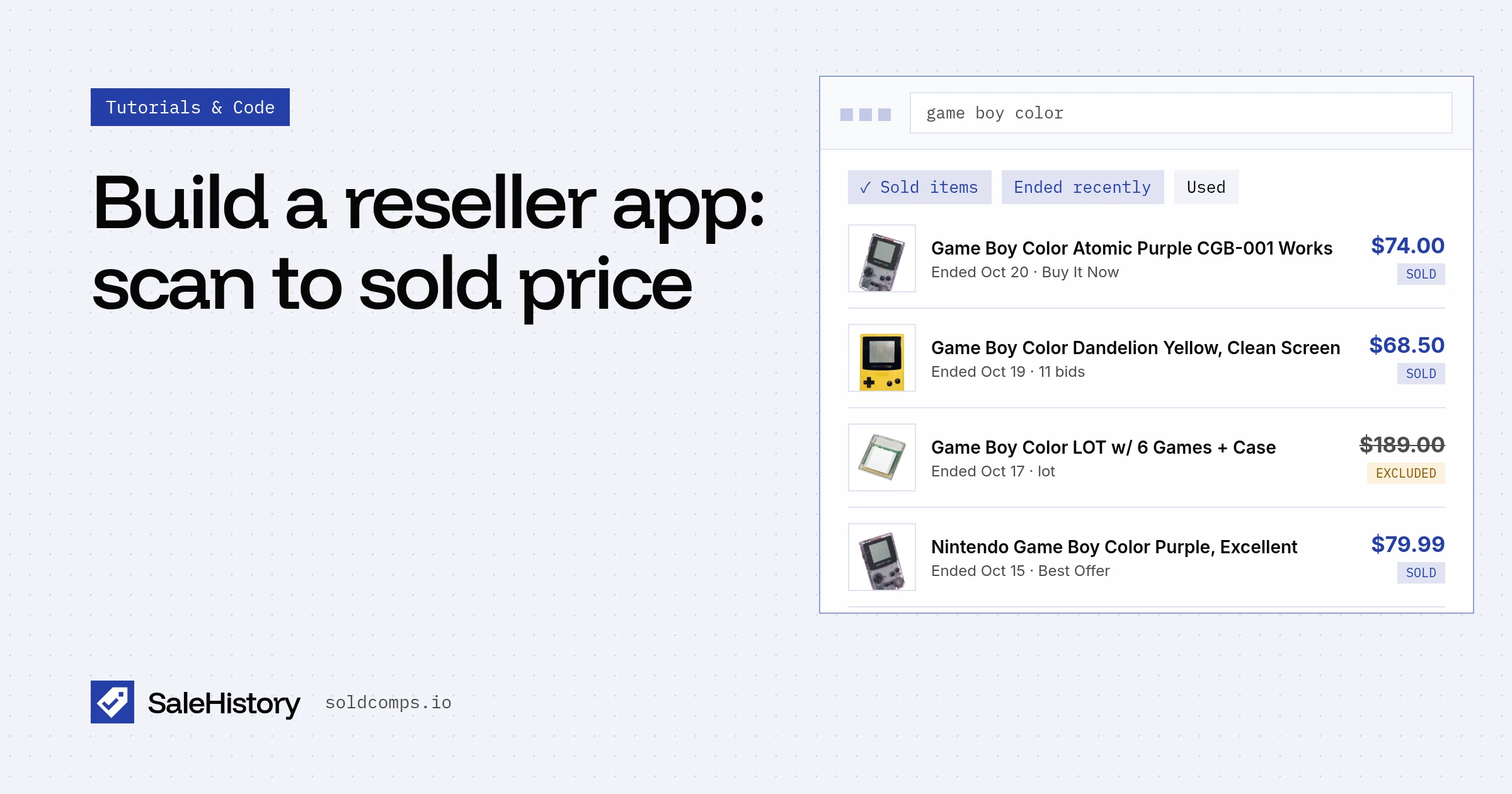
Build a Reseller App: Scan a Barcode, Get the eBay Sold Price — A reseller scanning app turns a barcode into a sell price: look up the product name from the UPC, search recent eBay sold listings for that exact product and condition, drop lots and outliers, and show the median with the number of sales. Speed matters in a store, so cache popular items and show results in under two seconds. Use sold prices, not active listings, or the app will overestimate profit.
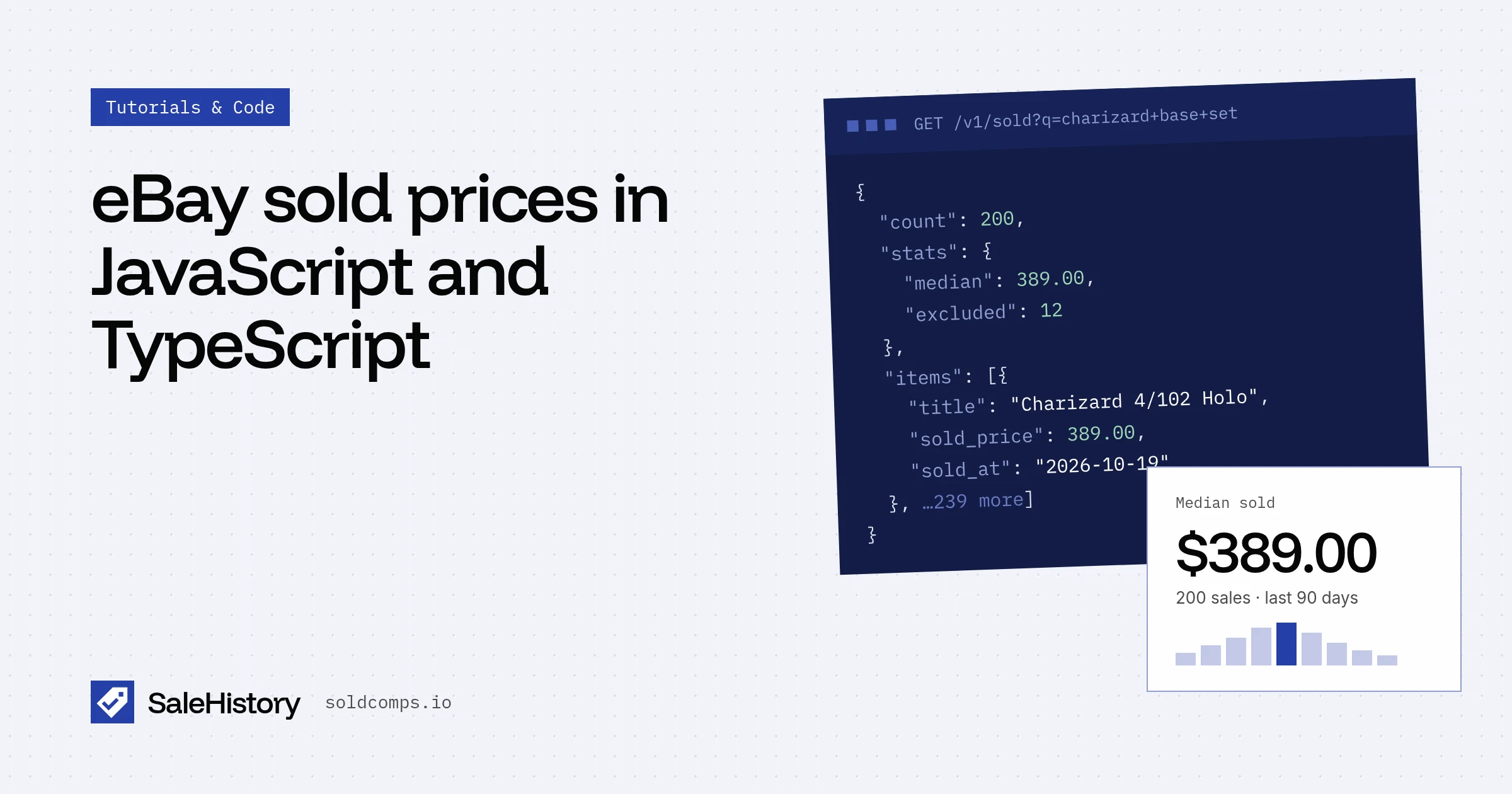
eBay Sold Prices in JavaScript and TypeScript (Node, Next.js, Edge) — In JavaScript or TypeScript, fetch eBay sold prices with one GET request to a sold-listings API using the built-in fetch, from server code only so your key stays secret. Type the response, treat non-200 responses as errors rather than zero results, cache results for 12–24 hours, and respect 429 Retry-After headers. In Next.js, call it from a route handler or server component.
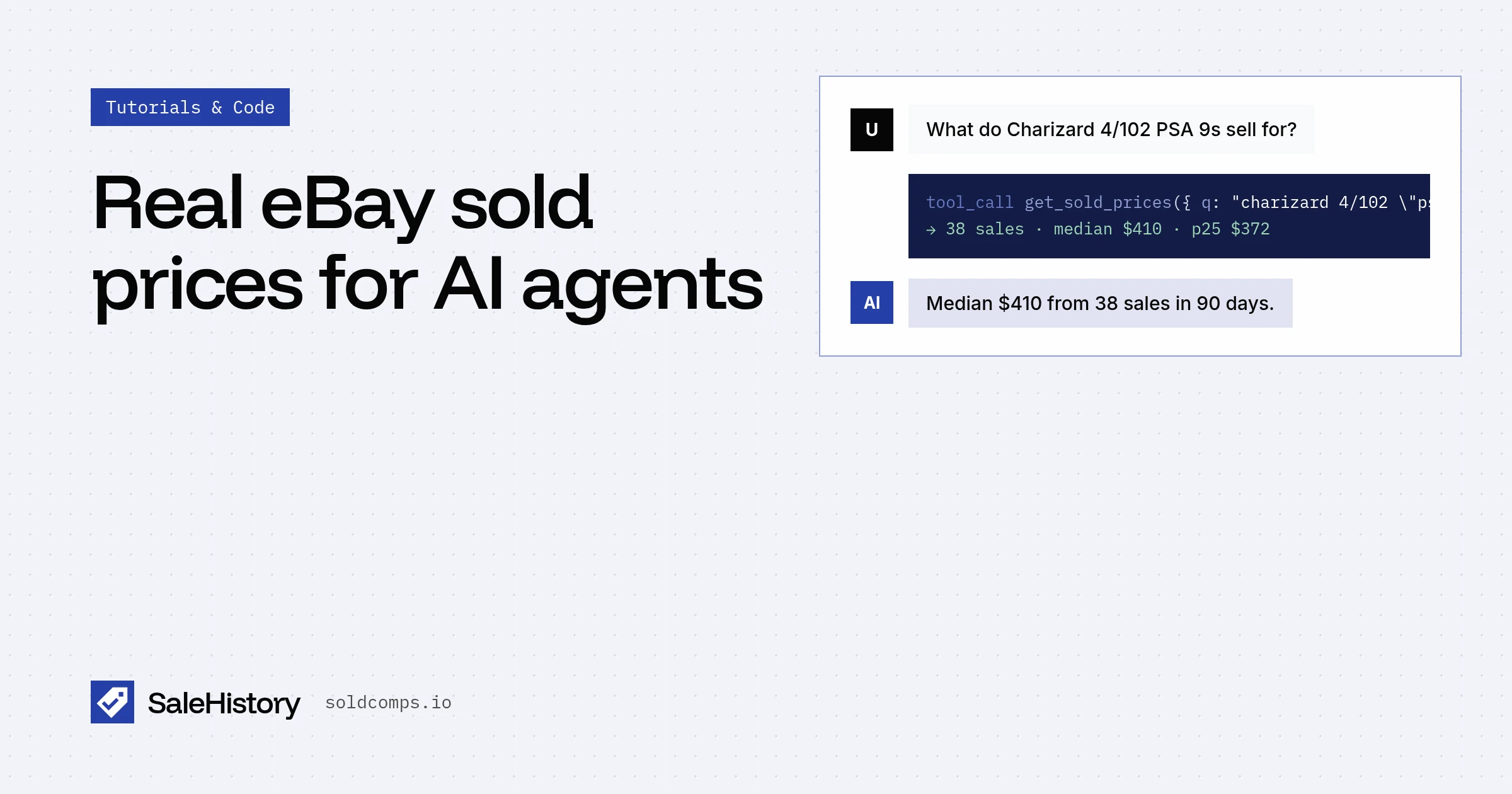
Give Claude or ChatGPT Real eBay Sold Prices (Tool Calling and MCP) — AI assistants can't read eBay sold prices directly: eBay blocks most AI crawlers and puts sold results behind a sign-in. Give the agent a tool instead: a function that calls a sold-listings API and returns the median, range, sale count and a few recent sales. Make failures explicit so the model reports 'no data' instead of inventing a price. The same function can be exposed to Claude Desktop or other clients as an MCP server.
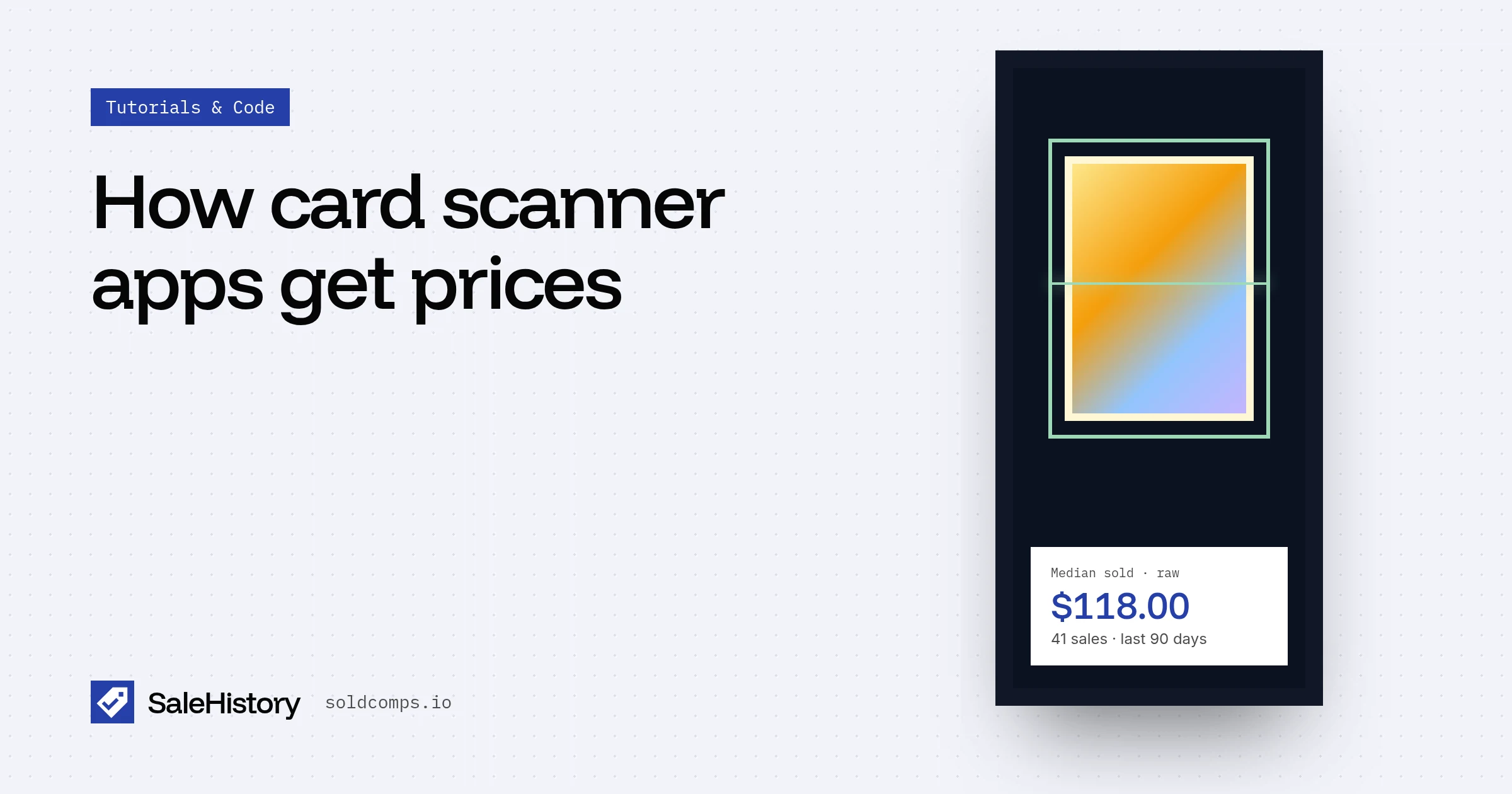
How Card Scanner Apps Get Prices (and How to Build One on Real Sales) — A card scanner app works in two steps: identify the card from a photo (name, set, number, and grade if it's slabbed), then look up its price. Accurate apps price from recent sold listings for that exact card and grade, using the median of 10 or more sales. Many apps instead show asking prices or a stale guide, which skew high. A sold-listings API gives an app real sold prices with one request per card version.
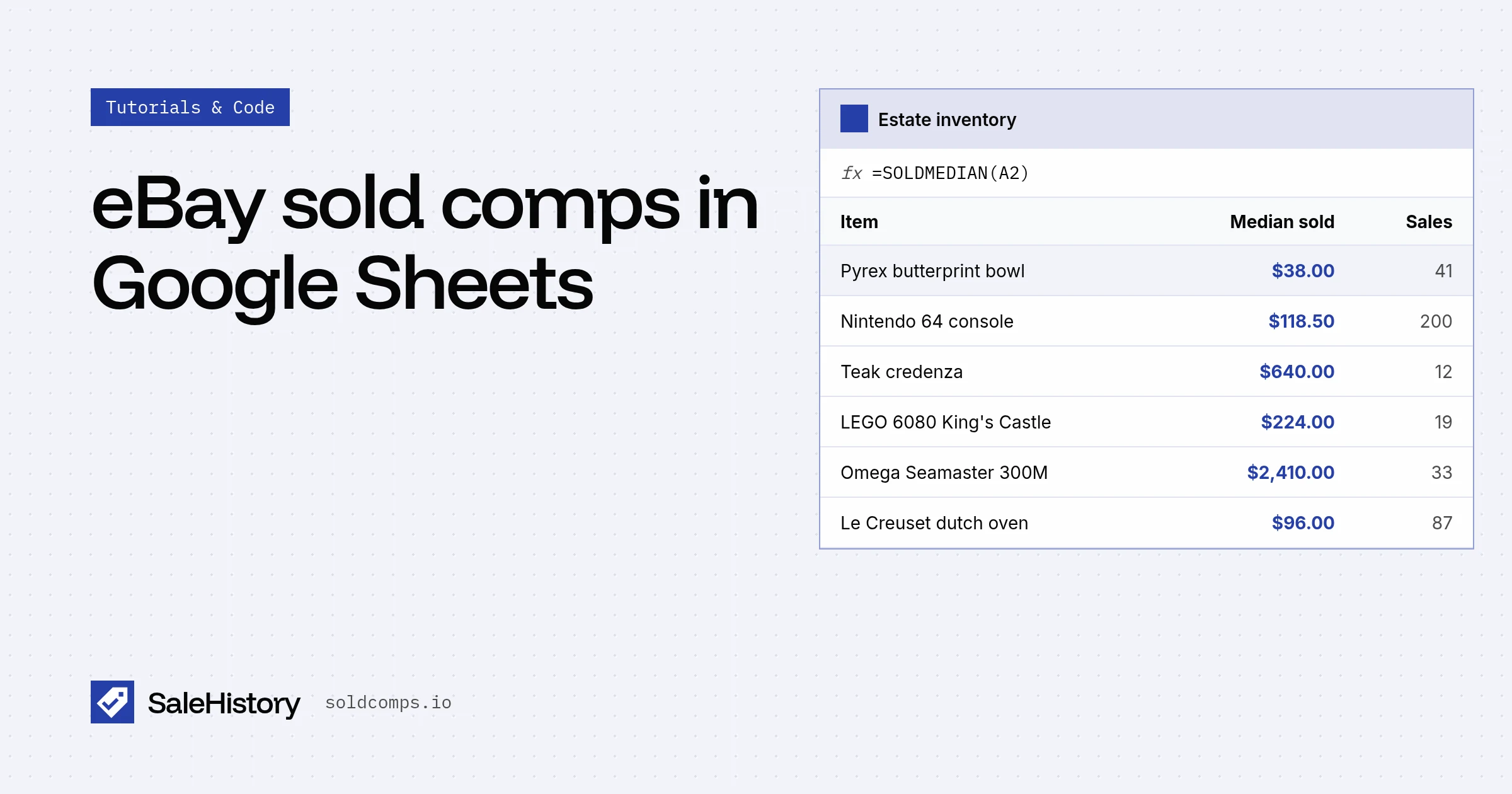
eBay Sold Comps in Google Sheets: A =SOLDMEDIAN() Formula in 12 Lines — Google Sheets can't read eBay sold listings directly, and IMPORTXML stopped working once eBay put sold results behind a sign-in. Instead, add a 12-line Apps Script custom function that calls a sold-listings API and returns stats.median. Then type =SOLDMEDIAN(A2) next to each item name to price a whole list.
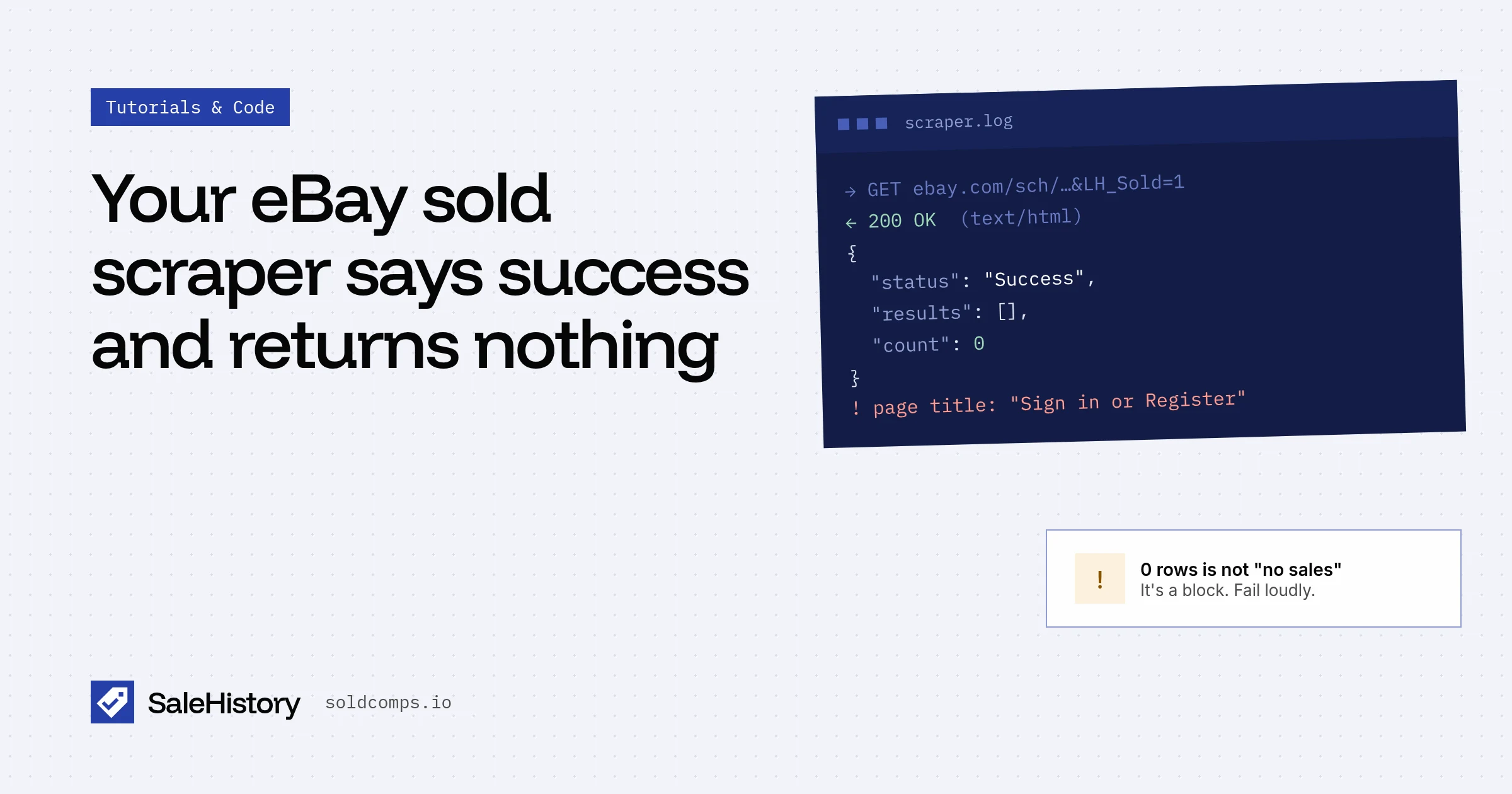
eBay Sold Scraper Returns 'Success' and Zero Results? You're Hitting the Login Wall — If your eBay sold-listings scraper or data provider returns HTTP 200 with zero results, it's probably hitting eBay's sign-in wall. Since July 2026, signed-out sold and completed searches redirect to a login page, so the page parses as 'no items' instead of failing. Detect it with a canary query that always has sales, check the page title or redirect for sign-in, and never store a zero-row result as a price of zero.
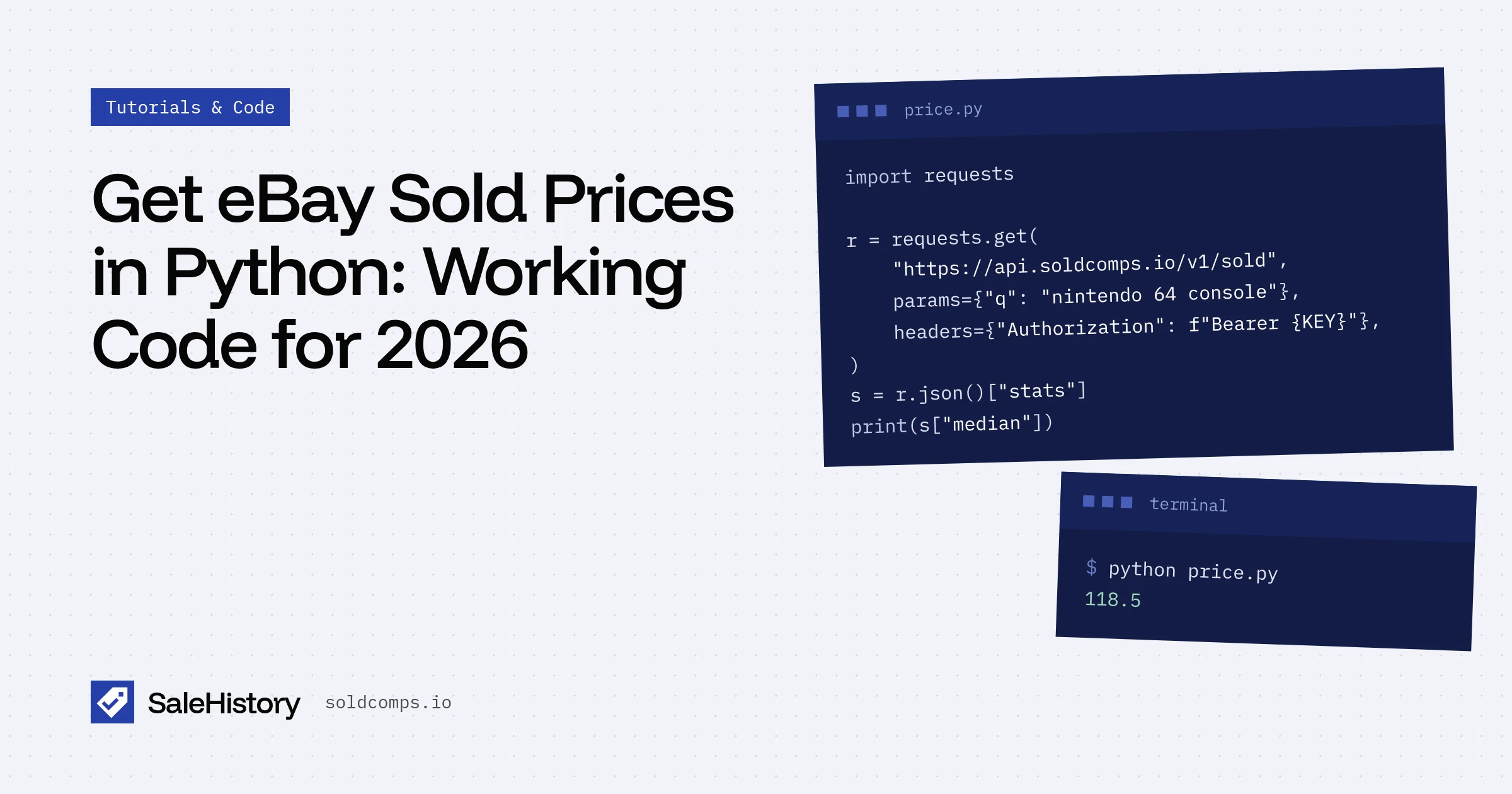
Get eBay Sold Prices in Python: Working Code for 2026 — Send a GET request to a sold-listings API with the requests library, read the JSON, and take the median of the sold prices after removing lots, for-parts items and outliers. With SaleHistory that's requests.get('https://api.soldcomps.io/v1/sold', params={'q': 'your item'}, headers={'Authorization': 'Bearer KEY'}). The response already includes stats.median, so pricing an item takes about ten lines.
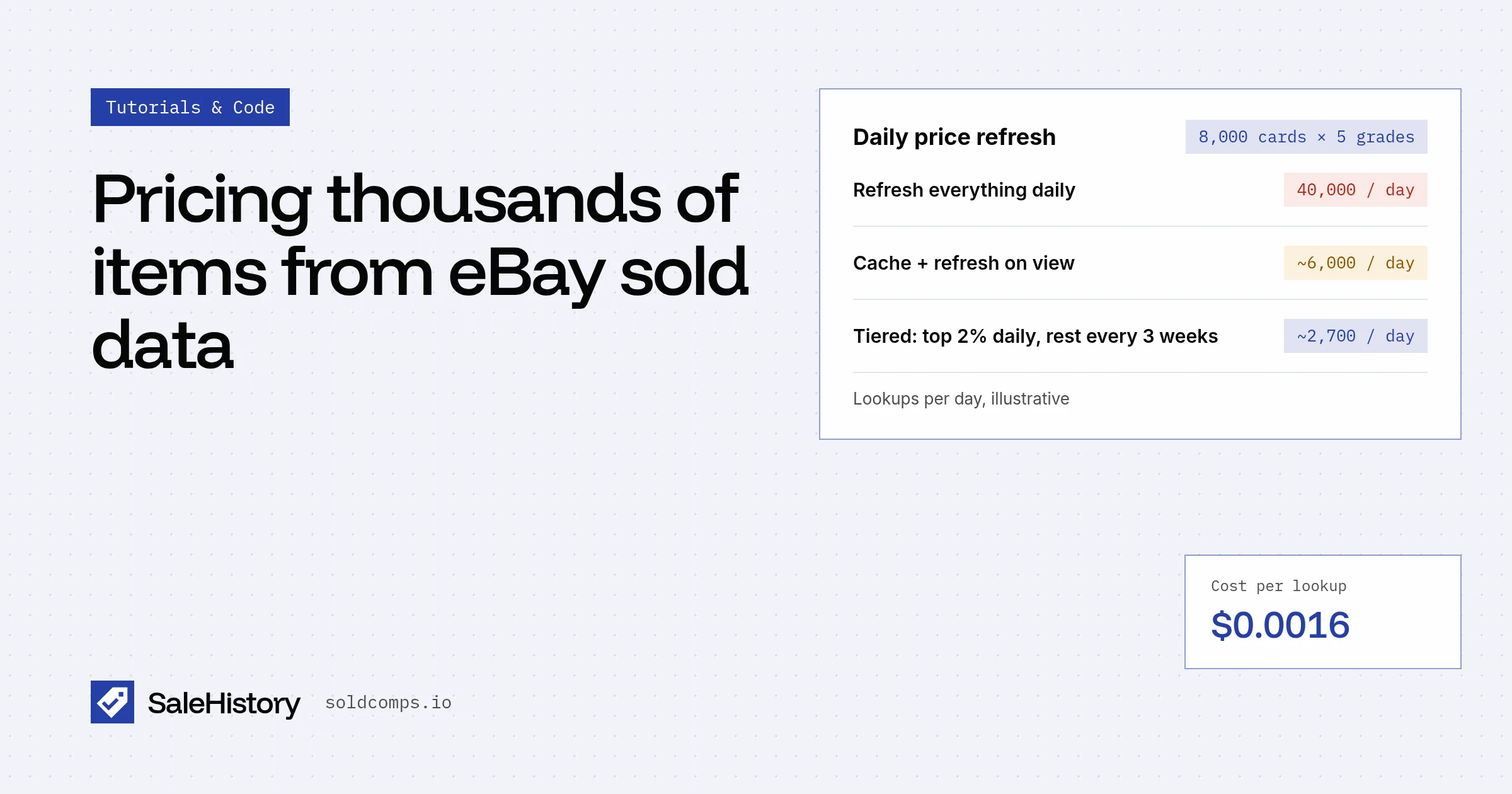
Pricing Thousands of Items Daily From eBay Sold Data: The Real Cost (and How to Cut It) — Refreshing 8,000 items in 5 versions every day takes 40,000 sold-price lookups a day, about 1.2 million a month. Most apps don't need that. Refresh items when a user views them, refresh the most popular 2% daily and the rest every few weeks, and cache results for a day. That typically cuts lookups to a few thousand a day, roughly 80,000 a month, while keeping the prices users actually see fresh.
AI listing tools write great titles but often price from active listings, which run high. How to add a real sold-comps pricing step, with code and guardrails.
A reseller app answers one question in the aisle: what does this sell for? Barcode to eBay sold median in seconds, with code, caching and matching tips.
Fetch eBay sold listings from Node, Next.js or an edge function: a typed client, error handling, caching, rate limits, and keeping your API key off the browser.
AI assistants can't read eBay sold prices and invent them when a tool fails. Give your agent a sold-price tool with explicit errors, plus a small MCP server.
Card scanner apps identify a card, then look up a price. Where that price comes from decides whether it's right. The pipeline, the common mistakes, and code.
Since July 2026 eBay sends signed-out sold searches to a login page, so scrapers return 'Success' with zero rows. How to detect it and protect your data.