A sold comp is the price something actually sold for, not what a seller is asking. These guides cover how to pull comps, read them, and avoid the traps that make a comp lie.
Start here (13 guides)
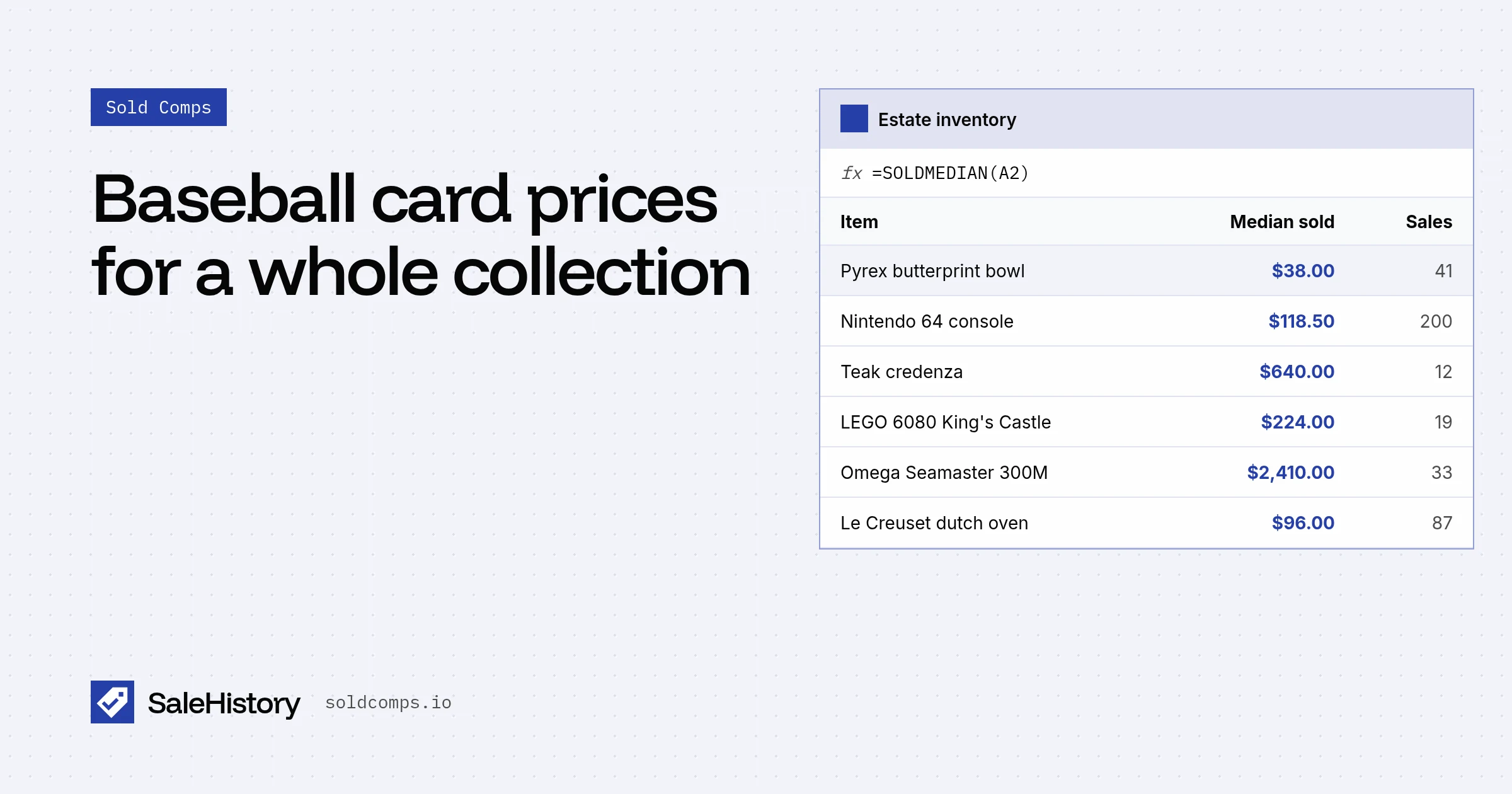
Baseball Card Prices: How to Price a Whole Collection From eBay Sold Data — Baseball card prices come from recent sold listings for the exact card: player, year, set, card number and any parallel. Search raw and each grade separately, skip lots, and use the median of recent sales. To price a whole collection, list the cards in a spreadsheet and look each one up automatically instead of searching eBay card by card.
Comic Book Prices From eBay Sold Listings: Raw vs CGC, Keys and Variants — To price a comic book, search eBay sold listings for the exact title, issue number and cover variant, then split raw copies from graded (CGC/CBCS) ones and match the grade. Exclude lots and runs, and use the median of recent sales. Graded copies of key issues can sell for many times a raw copy, so mixing them gives a wrong price. Price guides are a reference; recent sales show the current market.
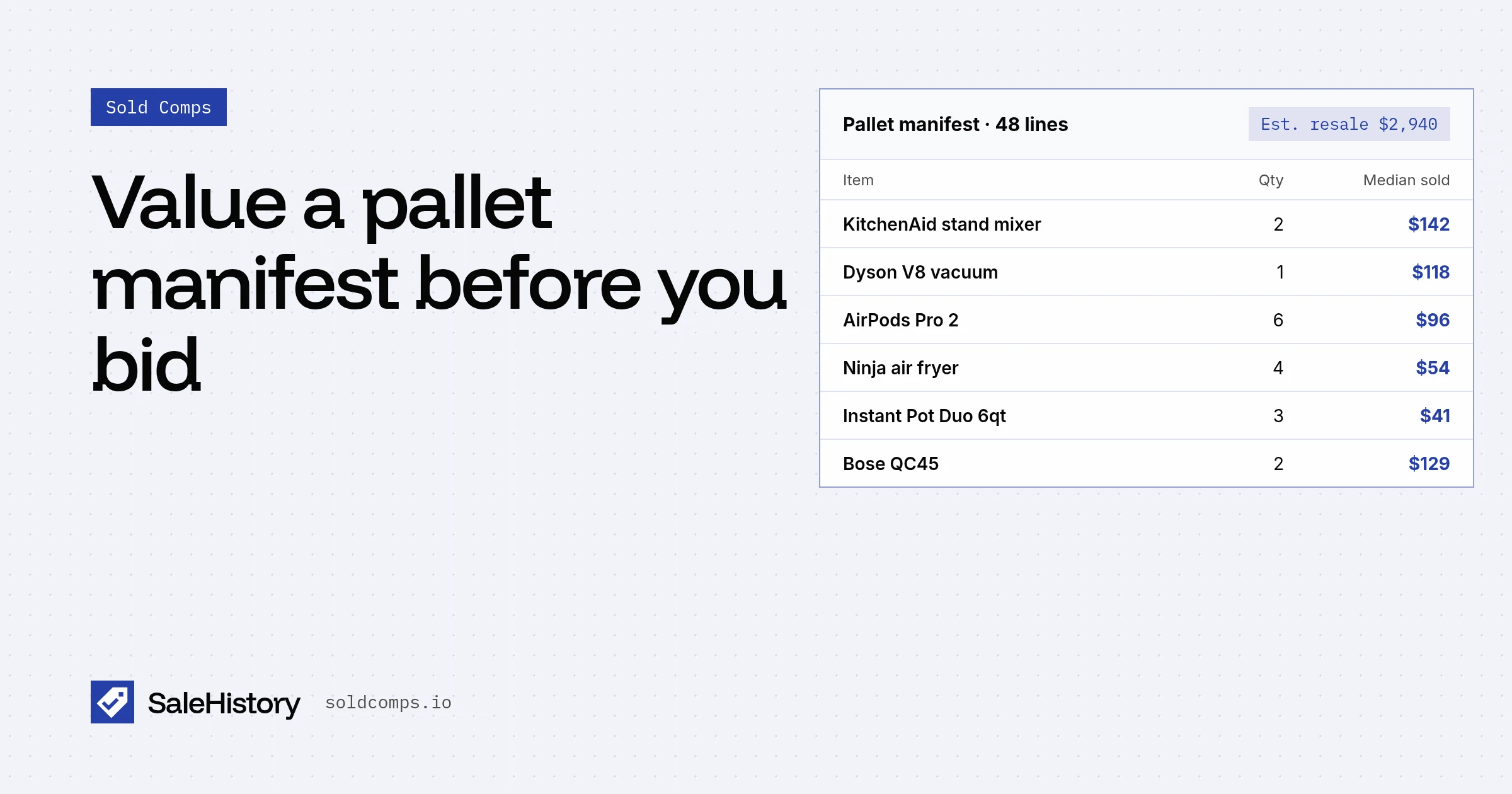
Liquidation Pallet Pricing: Value a Manifest Line by Line Before You Bid — To value a liquidation pallet, ignore the manifest's retail prices and price each line from recent eBay sold listings for that product in used or open-box condition. Multiply the median sold price by quantity, discount for returns, damage and missing items, subtract fees, shipping and your time, and bid well under what's left. Pricing the lines automatically from a spreadsheet takes minutes instead of hours.
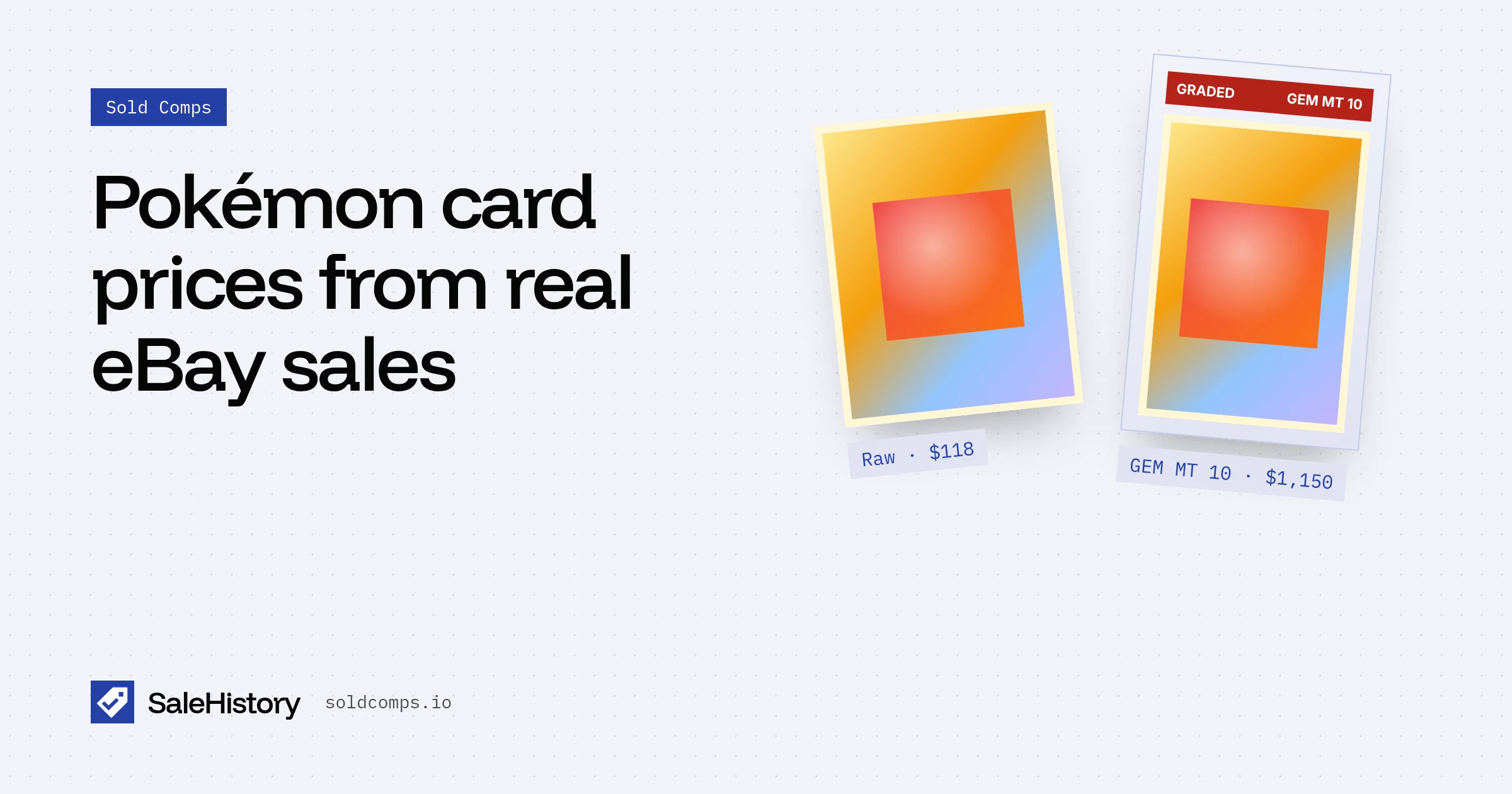
Pokémon Card Prices From Real eBay Sales: Raw, Graded and Japanese — To price a Pokémon card, look at recent eBay sold listings for the exact card (name, set and number), not asking prices or a price guide. Search raw and each grade separately, because a raw card and a PSA 10 of the same card can differ 10×. Exclude lots, then take the median of 10 or more recent sales. For prices that update automatically, pull the same searches through a sold-listings API on a schedule.
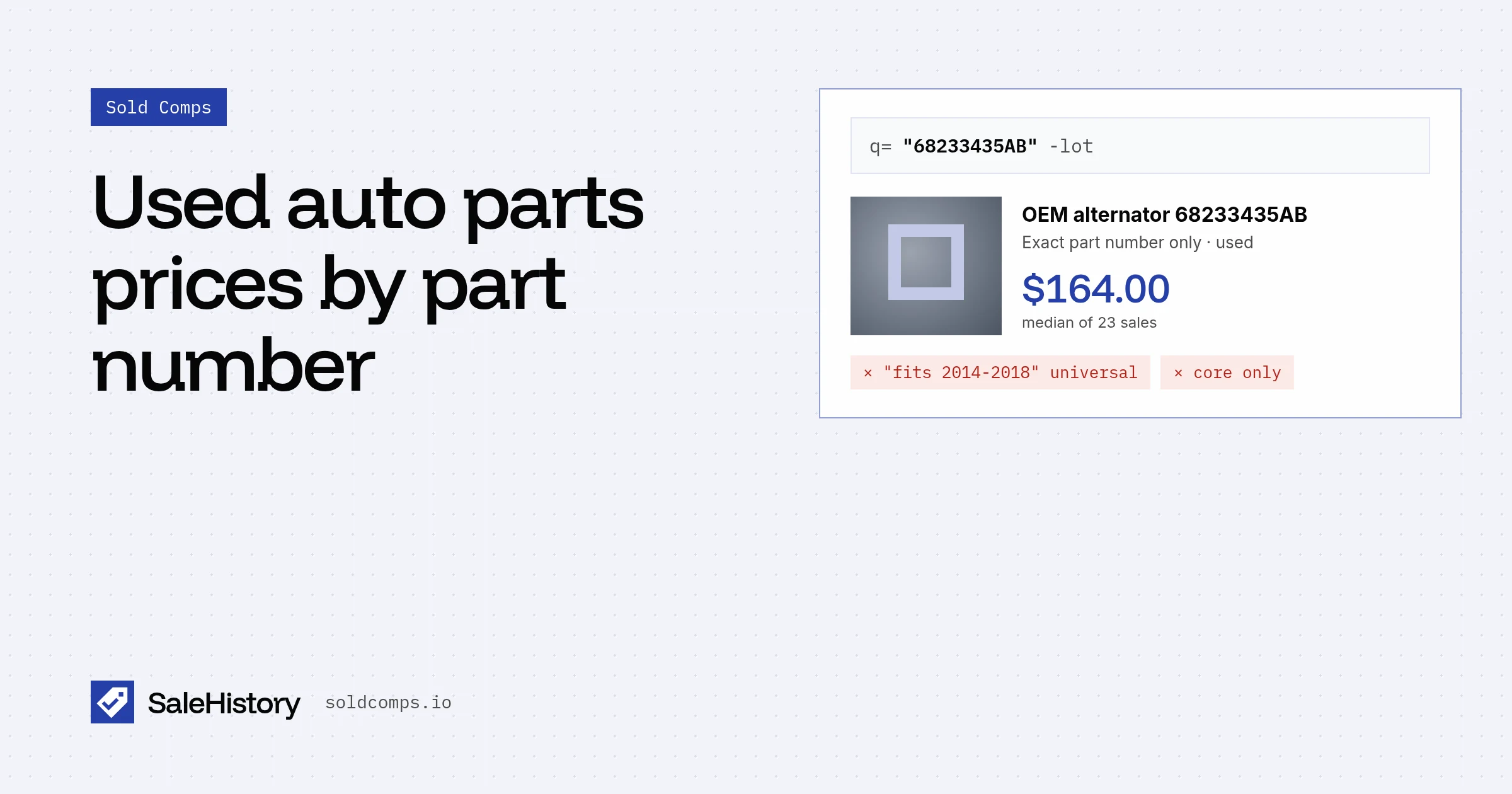
Used Auto Parts Prices by Part Number From eBay Sold Listings — Price used auto parts by searching eBay sold listings for the exact OEM part number in quotes, not a description. Titles are noisy, and eBay's loose matching mixes in parts for other vehicles. Include interchange numbers as separate searches, exclude cores and 'for parts' listings, and use the median of recent sales. For many parts, look them up from a spreadsheet or an API instead of one by one.
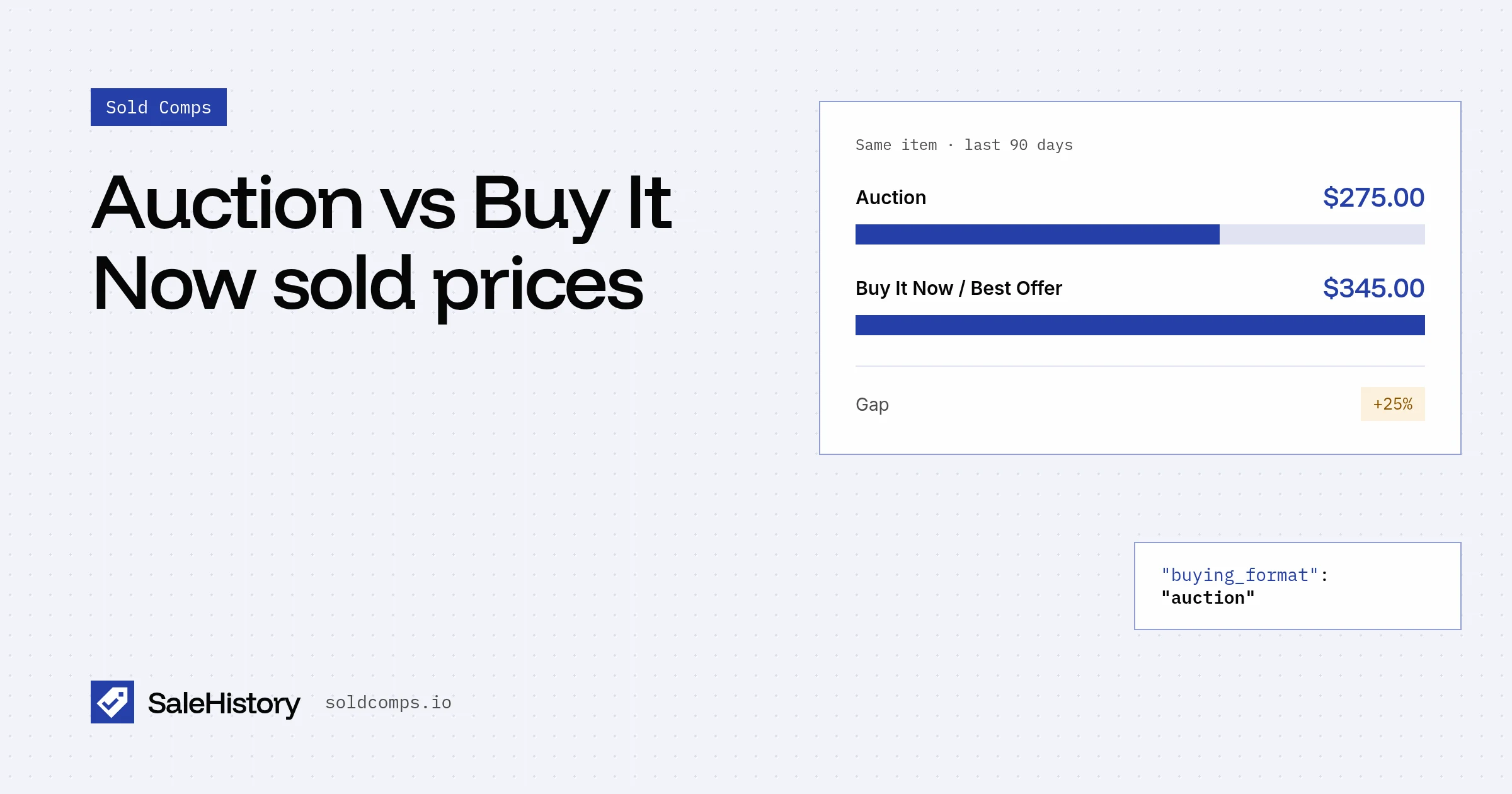
Auction vs Buy It Now Sold Prices on eBay: Why They Differ and Which to Comp — On eBay, auction sold prices and Buy It Now sold prices are two different markets. Auctions clear at what bidders will pay right now, so they often close lower; Buy It Now sales reflect buyers who paid a set price to get it immediately. One reported card example: auctions closed at $275 and $281 while fixed-price sales were $345 and $348.99. Comp auctions against auctions and Buy It Now against Buy It Now.
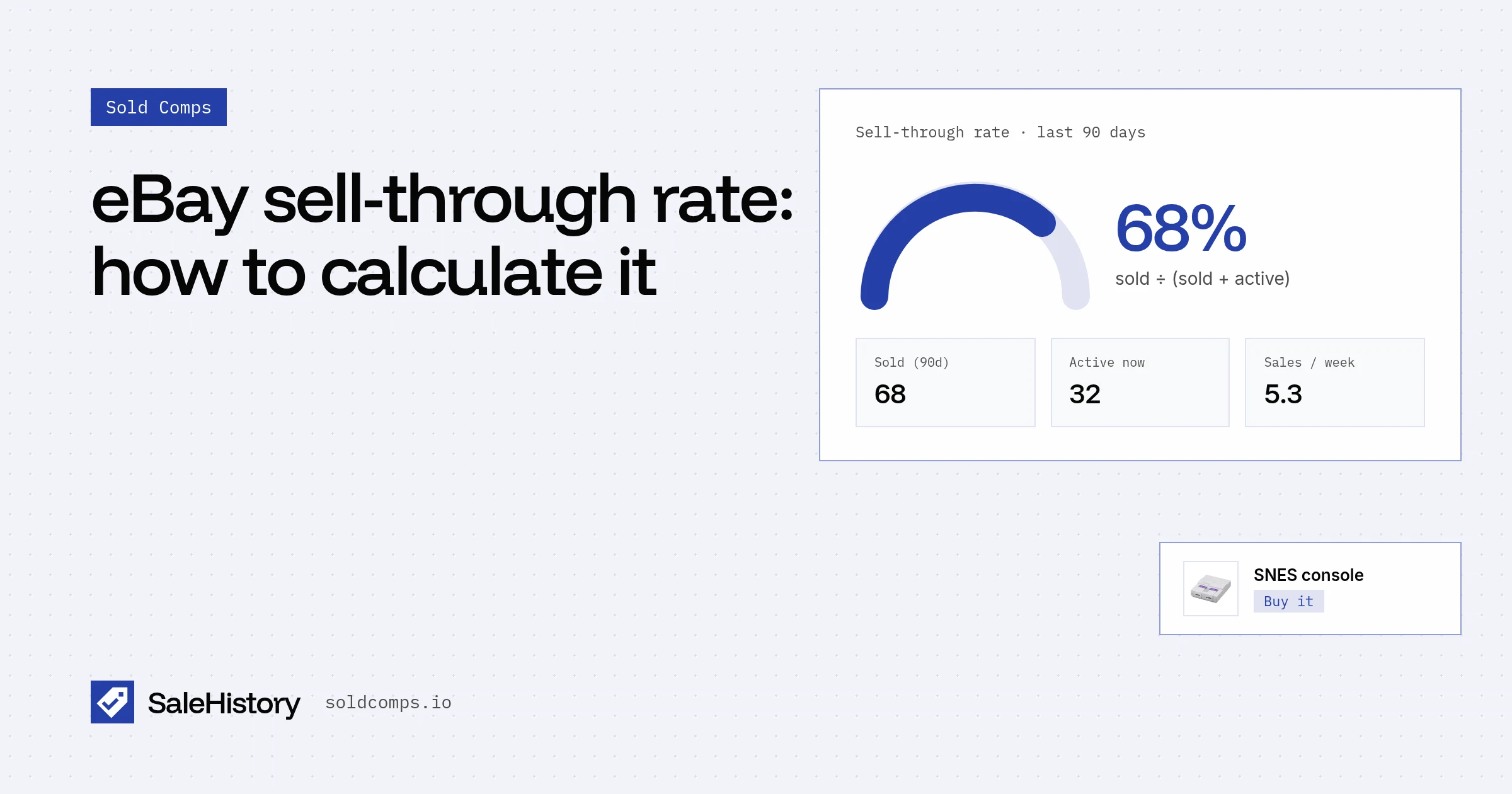
eBay Sell-Through Rate: How to Calculate STR (and What a Good One Is) — eBay sell-through rate (STR) is the share of listings that sold: sold listings in the last 90 days divided by sold plus active listings, times 100. If 68 sold and 32 are listed now, STR is 68%. Resellers commonly treat 50% or higher as a fast seller and under 20% as slow. Because eBay search matching is noisy, also check sales per week, which is just the 90-day sold count divided by 13.
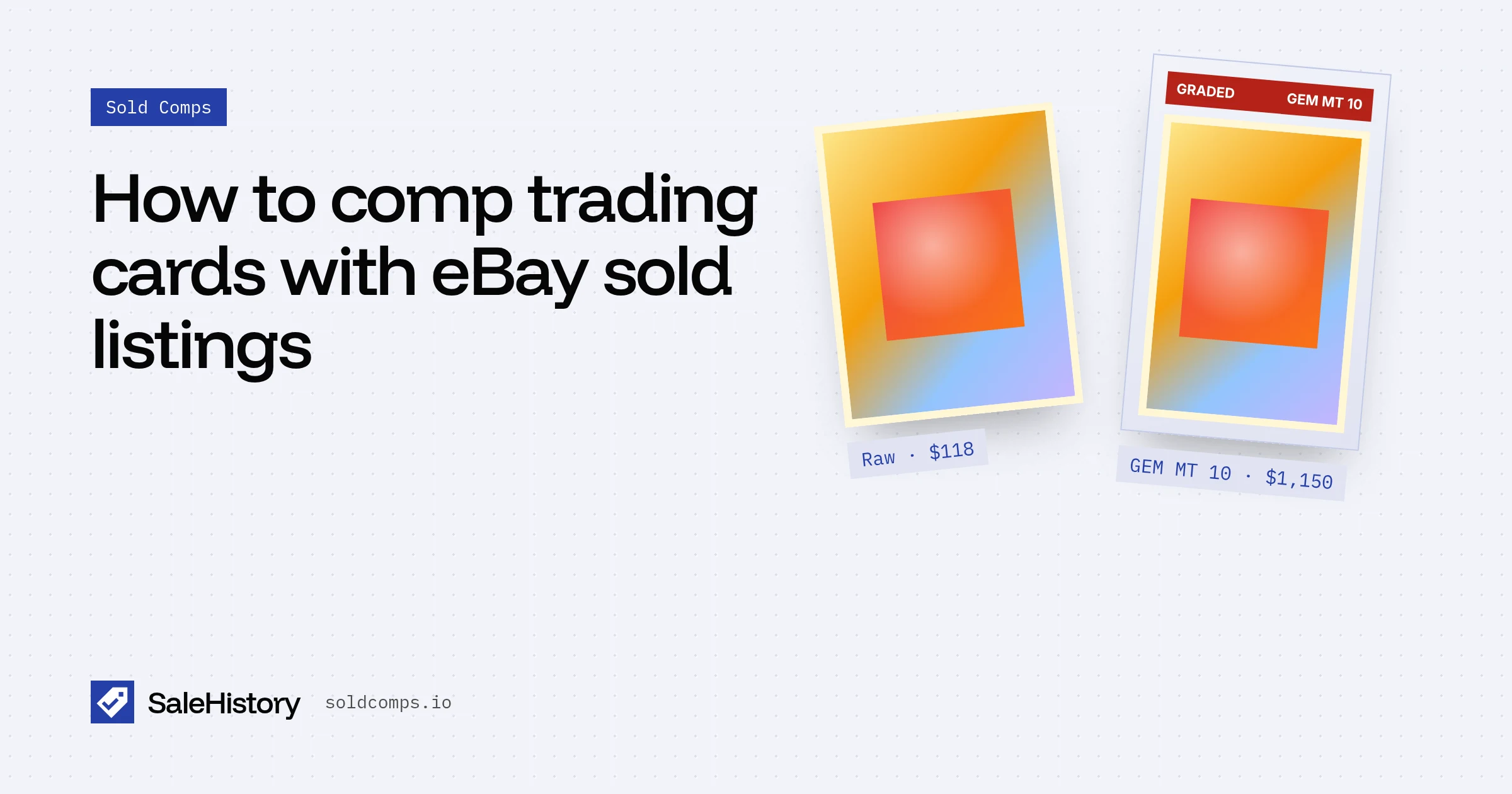
How to Comp Trading Cards With eBay Sold Listings (Raw vs Graded, Parallels, No Comps) — To comp a trading card on eBay, search each version separately: raw, then each grade (PSA 9, PSA 10, and so on), excluding the other versions with minus words like -psa -bgs -cgc. Exclude lots, then take the median of 10 or more recent sales. Mixing raw and graded sales in one median gives a number that's wrong for every version. If a card has no sales, comp the nearest versions: an adjacent grade, print run or grader.
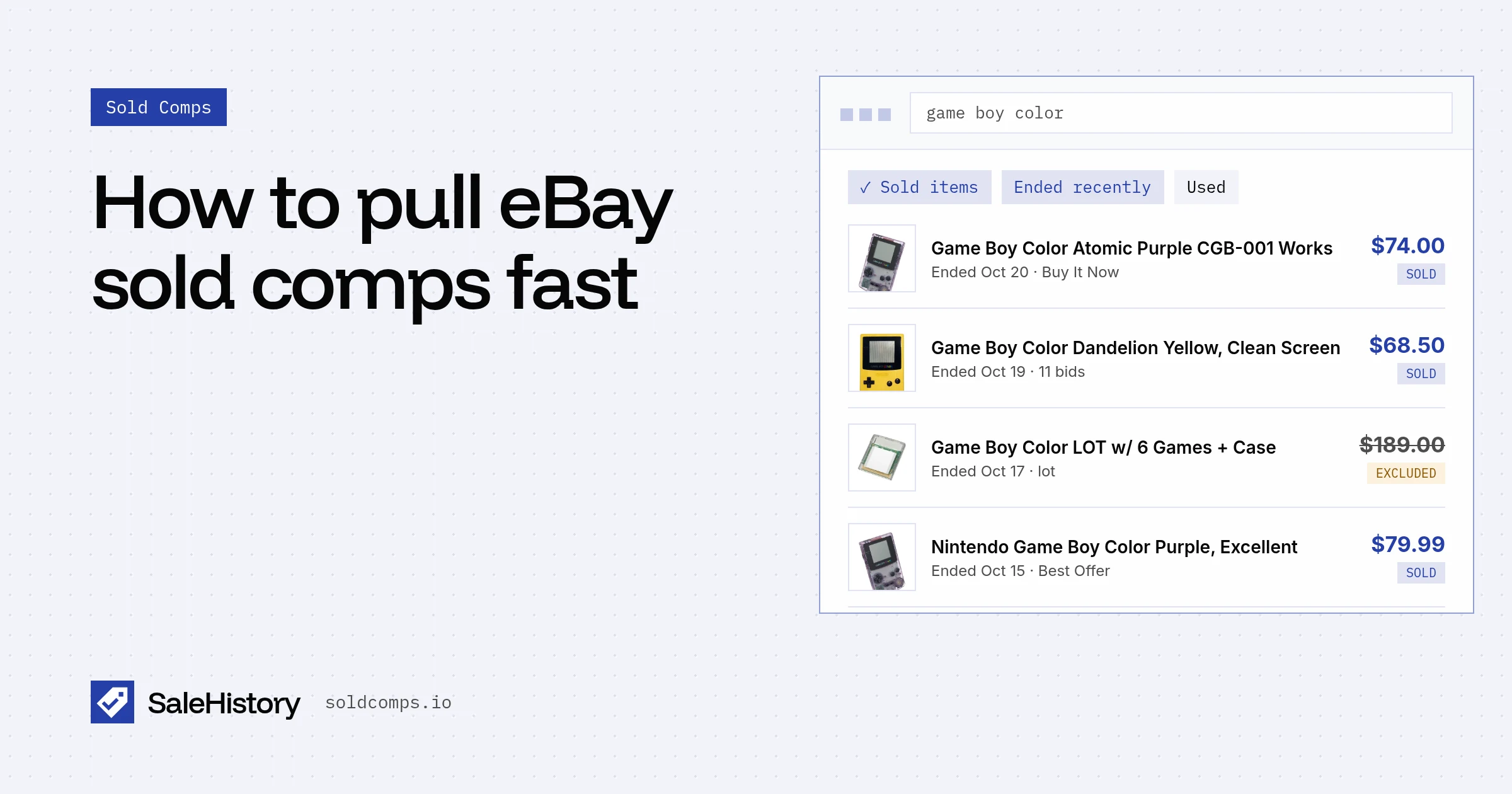
How to Pull eBay Sold Comps Fast (and Not Get Fooled by One Weird Sale) — To pull eBay comps, search the exact item, filter to Sold items and the right condition, drop lots, for-parts sales and the single lowest and highest prices, then take the median of what's left. Check you have at least 10 sales. Use the low end of the range to decide what to pay, and the median to decide what to list at. One cheap no-bid auction is an outlier, not the price.
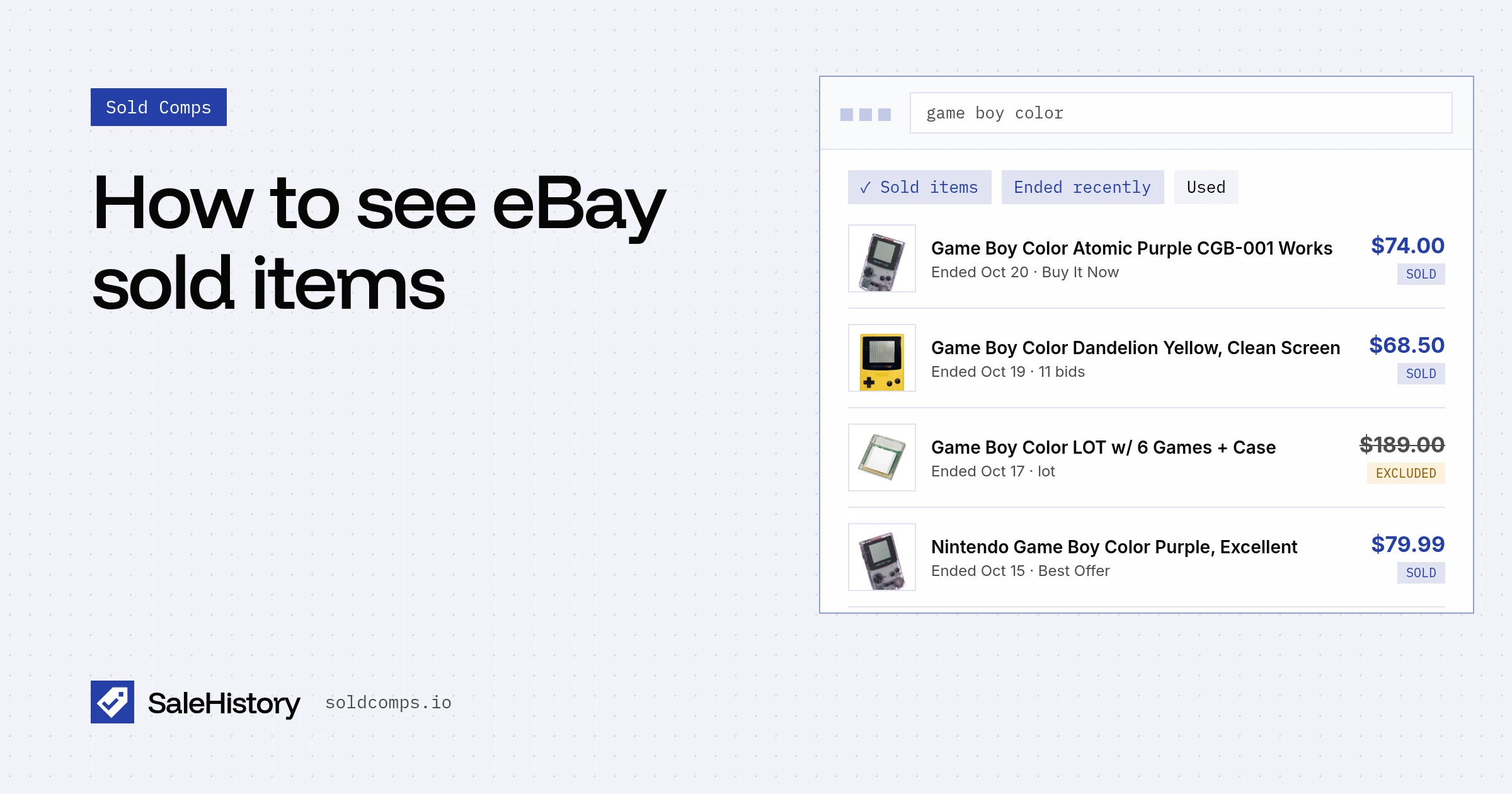
How to See eBay Sold Items (2026): Desktop, App, and in Bulk — Sign in to eBay, search for the item, then tick 'Sold items' under Filters (on desktop it's in the left sidebar; in the app it's under Filter). Sort by 'Ended recently' to see the latest sales first. Since mid-2026 eBay only shows sold results to signed-in users, and it shows about the last 90 days.
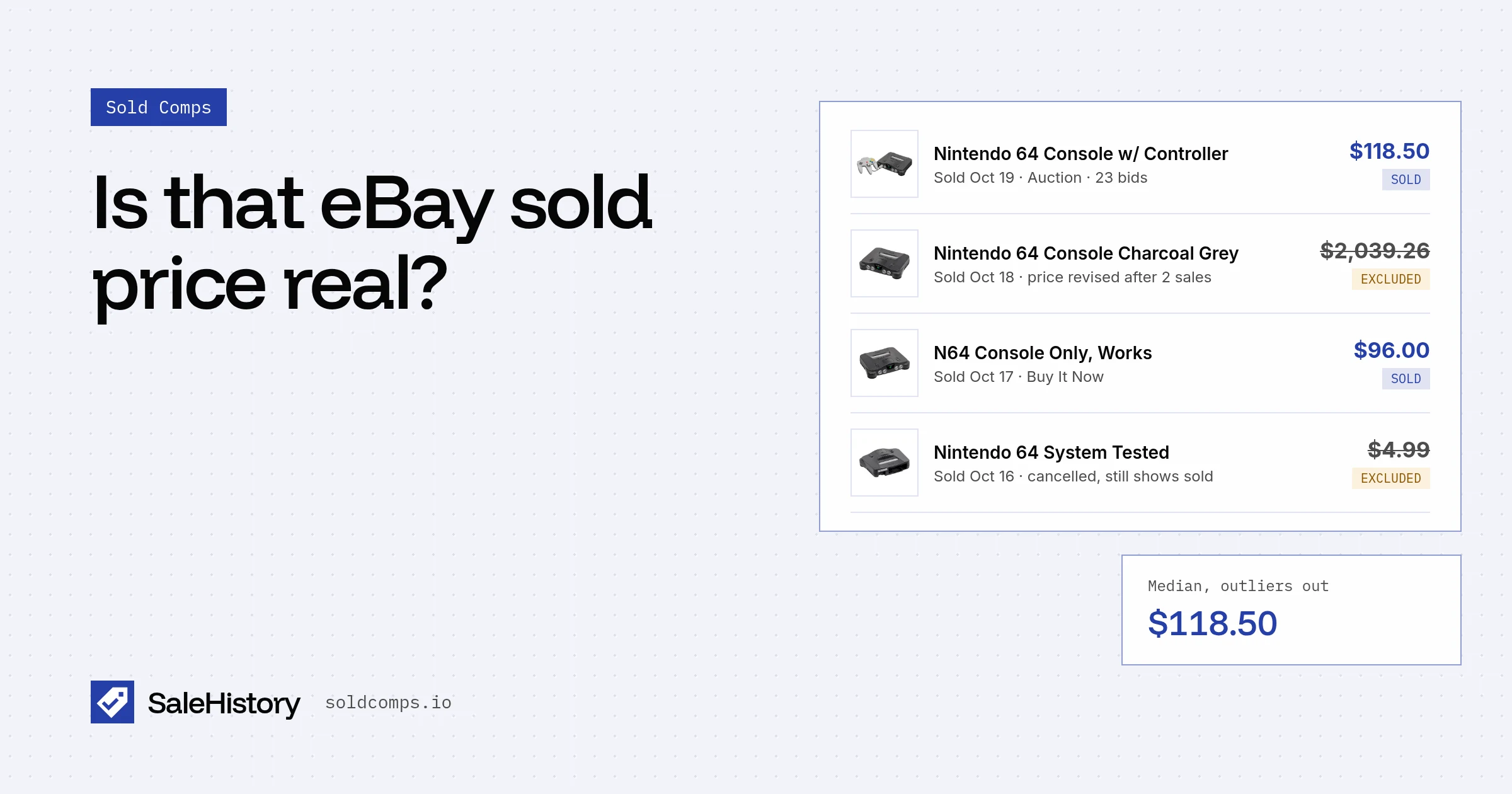
Is That eBay Sold Price Real? Cancelled Sales, Revised Prices, and Shill Bids — Some eBay sold prices aren't real sales. Cancelled orders can still show as sold, sellers can revise a multi-quantity listing's price after earlier sales (one $39.26 item showed as $2,039.26), listings ended by the seller can appear next to sold ones, and shill bidding can inflate auctions. Protect yourself by using the median of many sales instead of the last one, and by ignoring prices far from the rest.
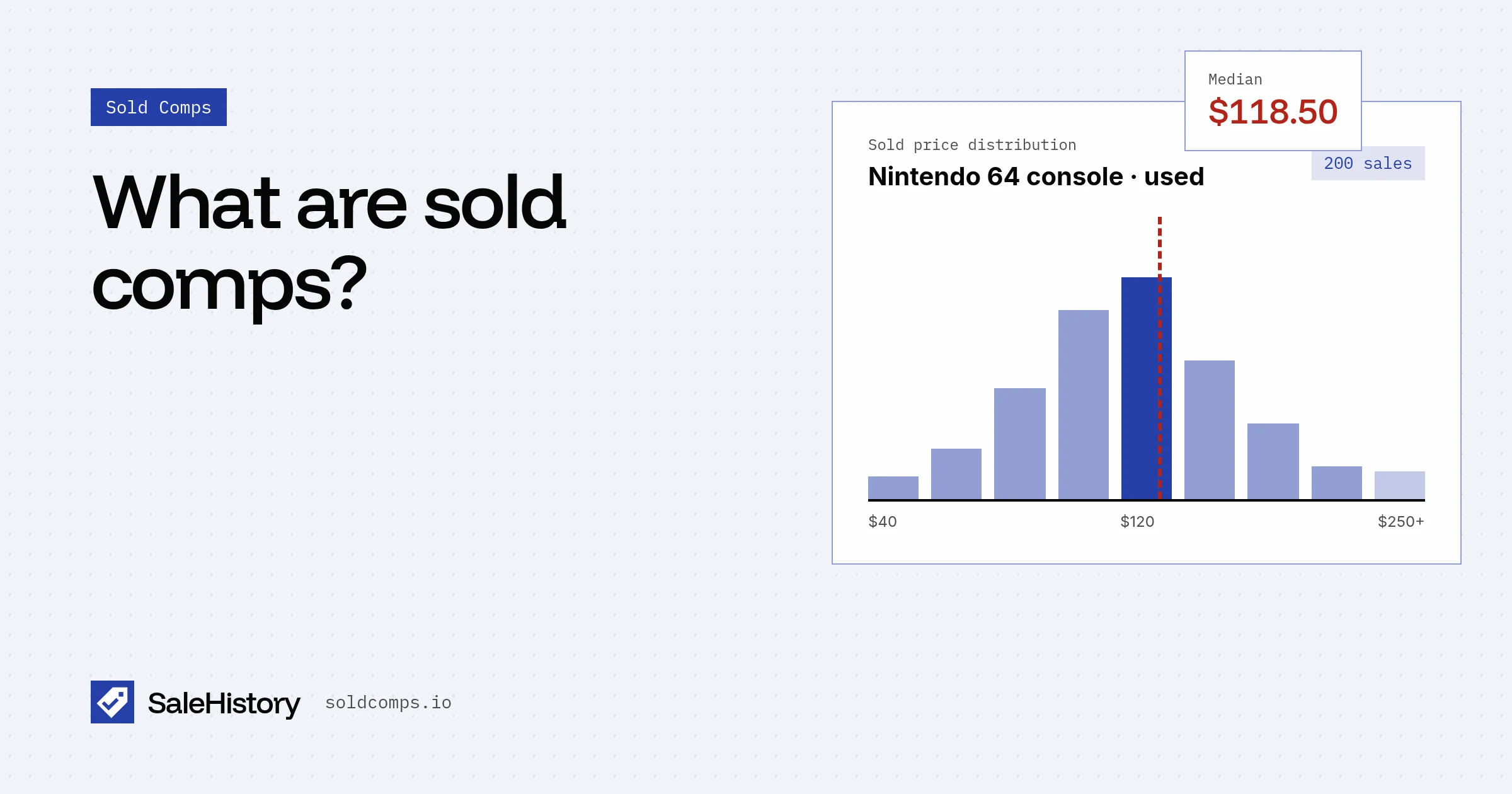
What Are Sold Comps? How Resellers Price Items From Real eBay Sales — Sold comps (sold comparables) are the prices that items like yours actually sold for recently, usually taken from eBay's sold listings. Resellers use them to decide what to pay at a thrift store or estate sale and what to list at. Use the median of 10 or more recent sales of the same item in the same condition, and ignore lots, for-parts listings and asking prices.
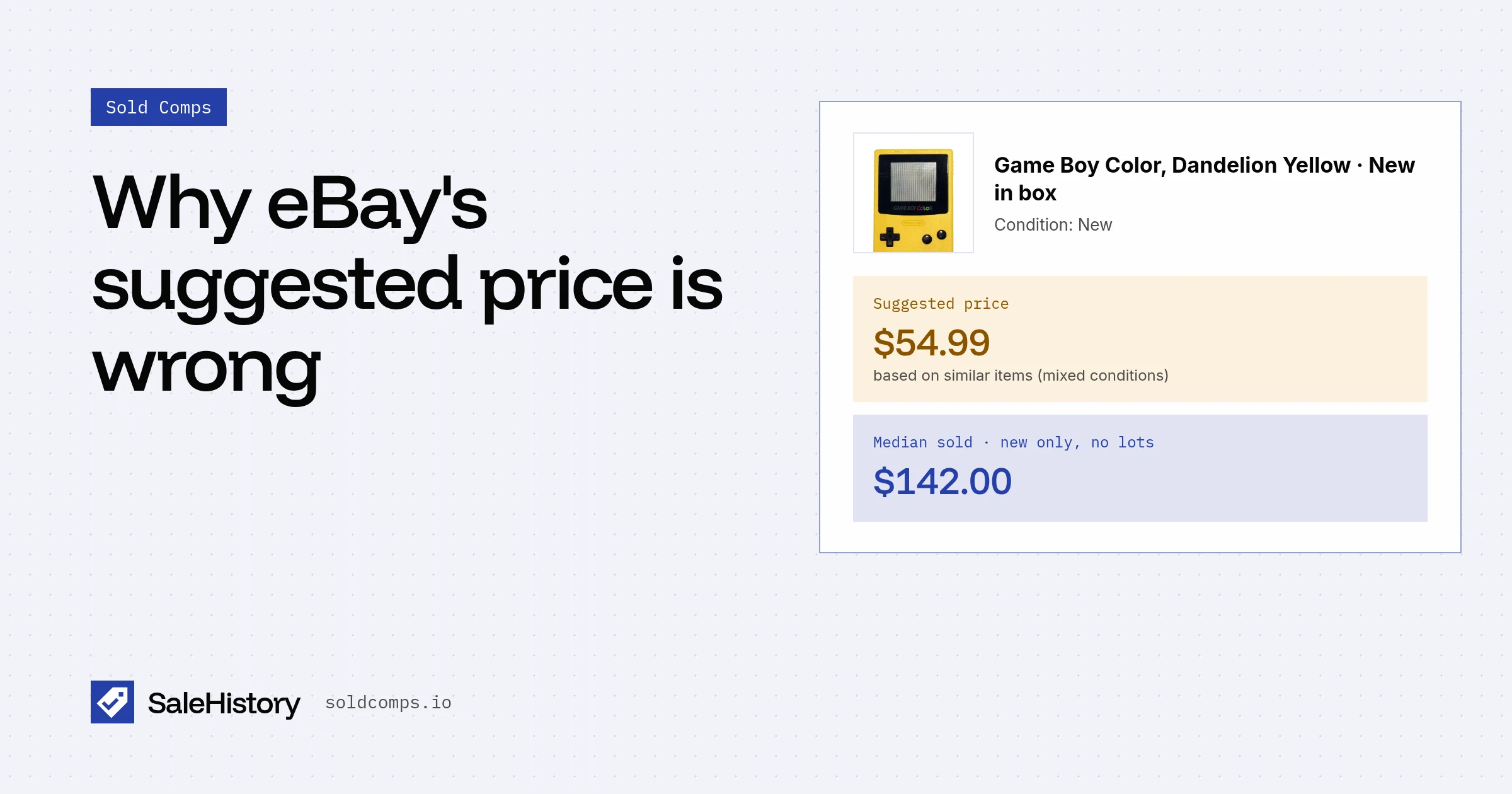
Why eBay's Suggested Price Is Wrong (and How to Check It in 30 Seconds) — eBay's suggested price can be wrong because it's built from 'similar items,' which can mix new and used condition, include large lots, match the wrong variant, or even compare you to your own listings. Before accepting it, check sold listings for your exact item in your exact condition, drop lots, and take the median. If the suggestion is far from that median, trust the sold comps.
Find baseball card prices from what cards actually sold for: search by player, year, set and number, split raw from graded, and price a whole collection.
How to price a comic from what copies actually sold for: title + issue + variant, raw vs CGC grades, key issues, and why a price guide and a sold comp disagree.
A pallet manifest lists retail prices, not resale value. How to price each line from recent eBay sold listings, discount for condition, and set a max bid.
How to find what a Pokémon card actually sells for: search the exact card, split raw from PSA and other grades, handle Japanese cards, and track prices.
Price used and OEM auto parts by part number, not title: exact-number searches, interchange numbers, cores and fitment noise, plus pricing a whole inventory.
Card comps go wrong when raw, PSA 9 and PSA 10 sales share one median. How to comp each version, handle parallels and graders, and price with no comps.
How to see sold items on eBay on desktop and in the app, why you now have to sign in, how far back sold prices go, and how to check many items at once.
eBay's suggested price can mix conditions, count big lots as one item, or match the wrong variant. How to spot a bad one and check it against sold comps.