Liquidation Pallet Pricing: Value a Manifest Line by Line Before You Bid
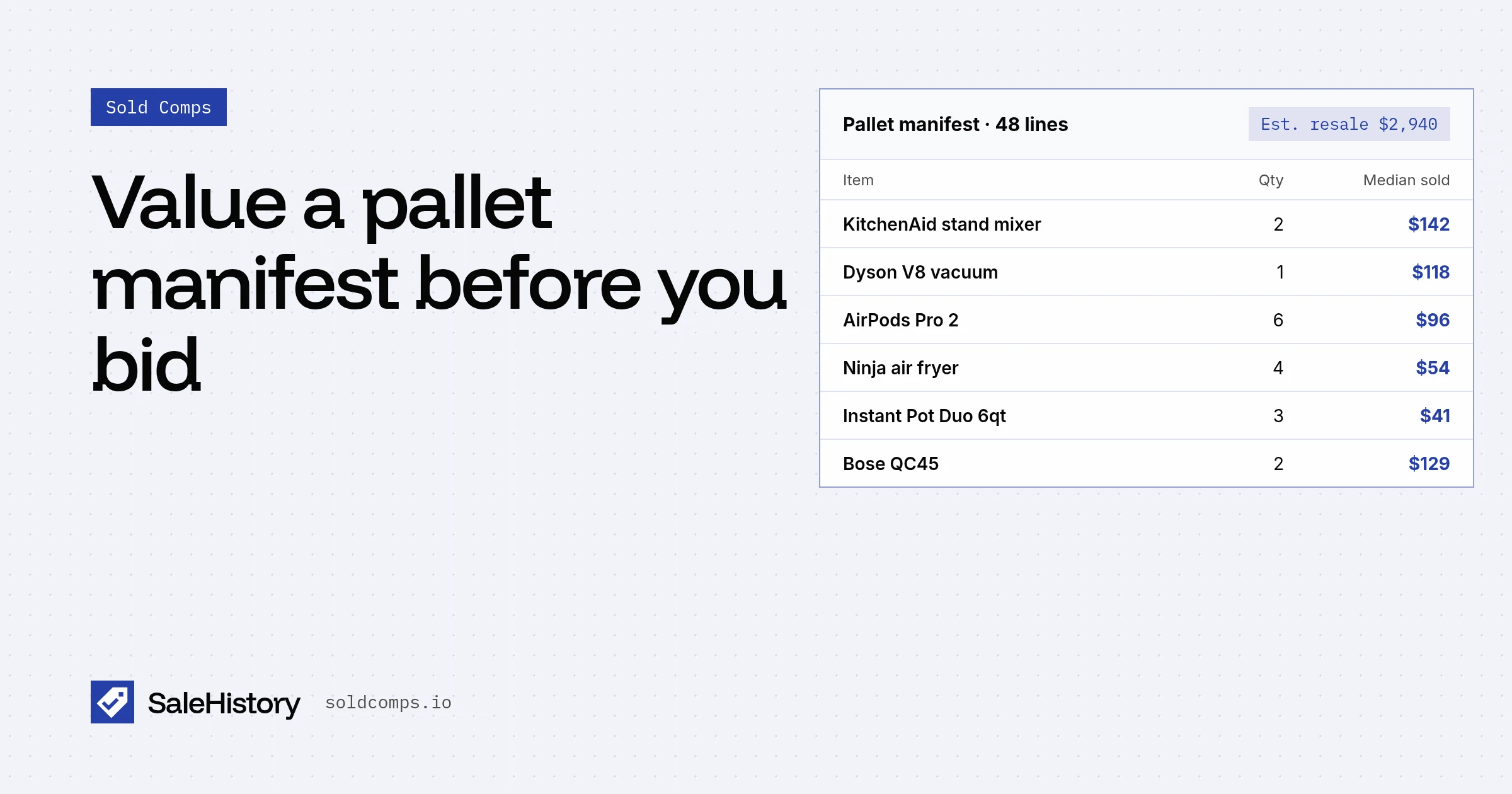
A pallet manifest is a list of what's (supposedly) on the pallet, with retail prices. "Retail value $6,800" sounds great until you remember nobody pays retail for a returned, open-box air fryer. What matters is what each line sells for used, on eBay, recently.
Step 1: clean the manifest
Manifests come as spreadsheets with columns like Item, Qty, UPC, Retail. Before pricing:
- Shorten titles to brand + model ("Ninja AF101 Air Fryer"). Retail titles are long and noisy.
- Merge duplicates and keep quantities.
- Flag low-value lines. Pricing 30 phone cases individually isn't worth it. Group them.
Step 2: price each line from sold listings
For each line, find the median sold price in used or open box condition, not new. Returned goods compete with used listings.
Doing this by hand for 50–200 lines is where people give up: "Looking up each item on eBay is going to be too time consuming." In a spreadsheet, it's one formula per row:
| Item | Qty | Median sold (used) | Line value |
|---|---|---|---|
| KitchenAid KSM150PS | 2 | =SOLDMEDIAN(A2, "used") | =B2*C2 |
| Dyson V8 Absolute | 1 | =SOLDMEDIAN(A3, "used") | =B3*C3 |
| Ninja AF101 | 4 | =SOLDMEDIAN(A4, "used") | =B4*C4 |
Setup takes five minutes: eBay sold prices in Google Sheets.
Step 3: discount for reality
Sum the line values, then apply your discounts:
- Damaged, missing or not-working rate. Returns pallets are rarely 100% sellable. Use your own history per supplier; start conservative.
- Selling fees (your eBay fee rate plus payment processing).
- Shipping and packaging per item.
- Your time. Listing 150 items is days of work.
Step 4: set your max bid
Max bid ≈ (sum of line values × sellable rate) − fees − shipping − labor − target profit
Resellers debate buying off the lowest comp or the average; for pallets, use the median for value and stay conservative on the sellable rate. That's where pallet math usually goes wrong.
Also check how fast it sells
A pallet of slow sellers ties up cash for months. For the top lines by value, check sales per week (clean sold count ÷ 13). Sell-through rate explained.
Do it before every auction
The bidders who win long-term price every manifest the same way, every time. Put the steps above in one sheet, paste each new manifest in, and you'll know your max bid in minutes. Try a few lines first in the sold comps lookup.
Frequently asked questions
How do I value a liquidation pallet?
Price each manifest line from recent eBay sold listings in used or open-box condition, multiply by quantity, apply a discount for damaged and missing items, then subtract fees, shipping and labor. Bid below the result.
Are liquidation manifest retail prices accurate?
They show the original retail price, not what the items resell for. Returned and open-box goods usually sell well below retail, so manifests overstate value.
What discount should I apply for damaged or missing items?
It depends on the category and source. Returns pallets often contain a meaningful share of damaged, incomplete or non-working items. Track your own results per source and use that rate on future bids.
Sources
- r/reselling: Looking up each item on eBay is going to be too time consuming (May 2026) (accessed Oct 23, 2026)
- r/Flipping: Buy off the lowest sold comp or the average? (Sep 2026) (accessed Oct 23, 2026)
SaleHistory sells an eBay sold-listings API, so we have a commercial interest in this topic. We link primary sources so you can check our work. Spotted something out of date? Email hello@soldcomps.io.