Sold Comps vs Active Listings: Which to Use When Pricing Resale Items
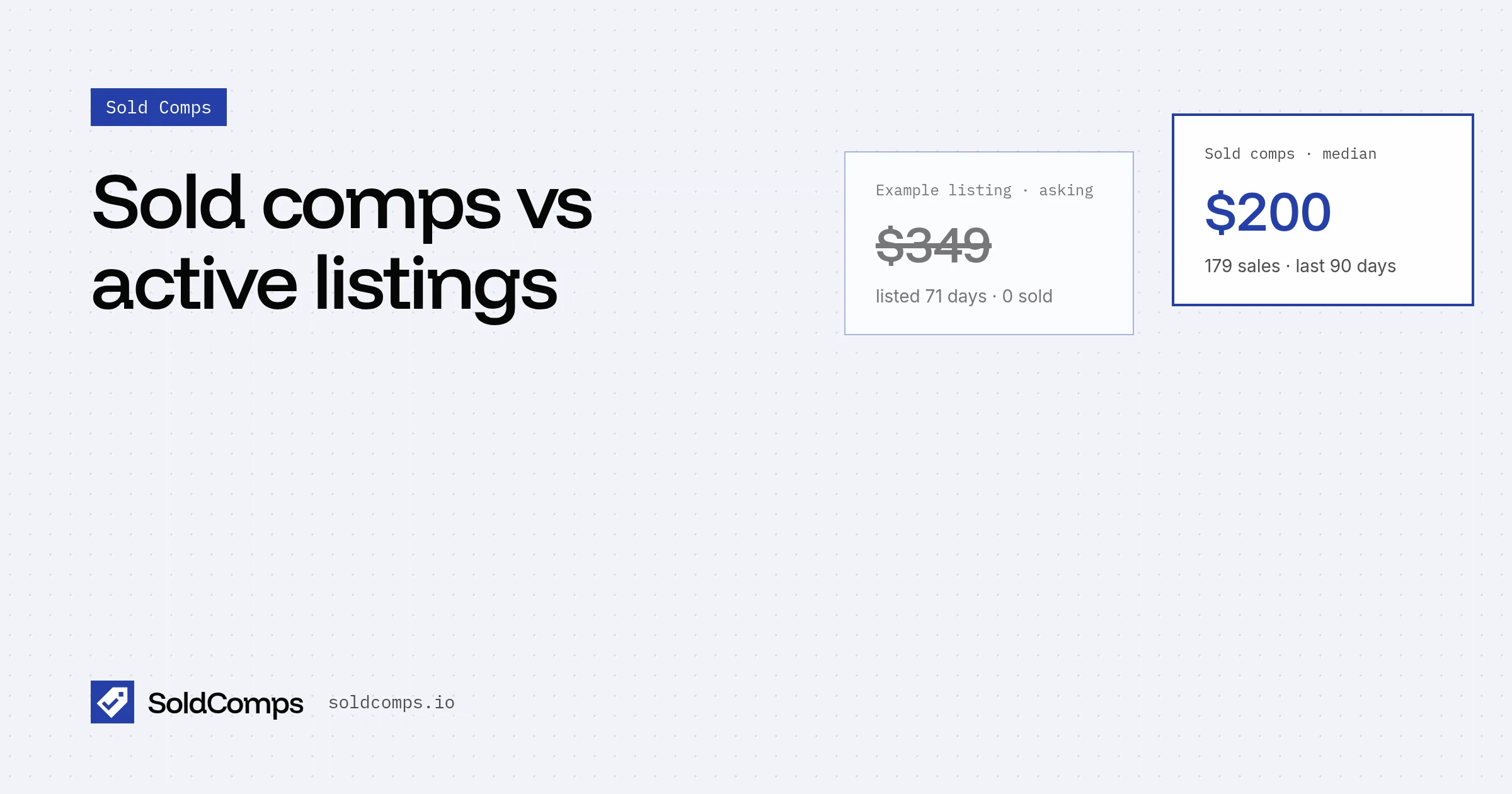
Search any item on eBay and the first thing you see is a page of active listings: prices sellers are asking right now. It's tempting to price from that page. Don't. Those numbers are the wrong half of the market.
(Quick note: in real estate, "sold comps" means recently sold homes. This post is about resale items, mostly on eBay.)
An asking price is a hope. A sold comp is a fact.
An active listing tells you what one seller would like to get. Nobody has agreed to pay it yet, and maybe nobody will. A sold comp tells you what a buyer actually paid, on a specific date, for a specific item. If you want to know what your item will sell for, the second number is the only one with evidence behind it. More on the basics in what sold comps are and how to read them.
Why unsold listings sit at the top of the range
This is the part most people miss. The active listings you see are not a random sample of the market. They're what's left over.
- Fairly priced listings sell and disappear. A listing at or below market gets bought, often within days, and drops off the active page.
- Overpriced listings stay up. They sit for weeks or months, so at any moment they make up a big share of what's listed.
- Stale listings pile up. Good 'Til Cancelled listings can stay live for months at a price that made sense once, or never did.
- Relists repeat the same hope. A seller whose item didn't sell often relists it at the same price, so the same unsold item shows up again and again.
The result: the active page skews high. Price from it and you end up listed next to the items that aren't selling.
What sold comps actually tell you
Here's a real example: a Le Creuset 5.5 qt dutch oven, from eBay US sold listings over the last 90 days (pulled Oct 26, 2026; prices move).
| Measure | Value |
|---|---|
| Clean sales (lots and parts dropped) | 179 |
| Median sold price | about $200 |
| Middle half of sales | $145 to $290 |
| Buy It Now median | about $220 |
| Auction median | about $183 |
That's a lot more than one number. The median says a typical one sells for around $200. The middle range says most land between $145 and $290, so condition and color matter. And the format split says Buy It Now buyers paid a bit more than auction bidders, which is common (why auctions often close lower).
Scroll the active listings for the same pot and you'll typically see plenty of asking prices above the upper end of that range, sitting there because they haven't sold. None of them tell you what a buyer will pay. The sold comps do.
Use the median, not the average: one rare color at a very high price drags the average up. Median vs average sold price explains why.
When active listings are still useful
Active listings are bad for setting a price, but good for sizing up the competition.
- Sell-through. Compare how many are listed now with how many sold in the last 90 days. That's the eBay sell-through rate. Lots of sales and few listings means it moves fast. Lots of listings and few sales means you'll wait.
- Undercutting. Once you know the sold range, look at the cheapest active listings in the same condition. If several sit just below the median, you either beat them or wait your turn.
- Spotting a crowded market. If a new release or a viral item suddenly has hundreds of listings, prices are about to soften even if recent sold comps still look strong.
- Checking your own listing. If yours is the highest-priced of twenty identical items, that's why it isn't selling.
Which one answers your question
| Question | Use |
|---|---|
| What will this sell for? | Sold comps (median) |
| What should I pay at the thrift store? | Sold comps (median, minus fees and margin) |
| Is my price too high? | Sold comps (compare to the middle range) |
| How fast will it sell? | Both: sold count vs active count (sell-through) |
| Who am I competing with right now? | Active listings |
| Is the market getting crowded? | Active listings, over time |
| Should I list as auction or Buy It Now? | Sold comps, split by format |
A few cautions about sold comps
Sold comps are the better source, but read them carefully. Match the exact item and condition, drop lots and for-parts listings, and look for at least 10 sales. Watch for accepted Best Offers shown at the list price, and for cancelled or shill-bid sales: see how to tell if an eBay sold price is real.
Getting sold comps quickly
eBay now requires signing in to see sold listings, and its sold search covers about 90 days. For a single item, the free sold comps lookup shows recent eBay sales with the median and middle range, 5 lookups a day, no eBay sign-in. For many items or an app, the same sold comps come from the API in one request:
curl "https://www.soldcomps.io/v1/sold?q=le+creuset+dutch+oven+5.5" \
  -H "Authorization: Bearer $SOLDCOMPS_KEY"
# → { "count": 179, "stats": { "median": 200.00, "p25": 145.00, "p75": 290.00, ... } }
One request is one search and returns up to 200 sold listings. The free plan includes 100 requests a month; see pricing.
Then glance at the active listings. Not for the price, but to see who else is selling.
Frequently asked questions
Should I price from sold or active listings on eBay?
Price from sold listings. They show what buyers actually paid. Active listings show what sellers are asking, and many of them never sell at that price.
Why are active listings usually priced higher than sold prices?
Listings priced at or below the market sell and disappear. The overpriced ones stay up, so whatever is listed at any moment skews toward the top of the range.
Are active listings useless for pricing?
No. They tell you how much competition you have. Compare how many are listed now with how many sold in the last 90 days to get the sell-through rate, and check the cheapest comparable listing before you set your price.
Do sold comps mean the same thing in real estate?
The idea is the same: recent sales of comparable things. In real estate it means recently sold homes. This guide is about resale items like the ones sold on eBay.